On Tuesday, we went over 1 key strength for every SEC men’s basketball team so far in 2025-26. Today, we’ll be taking more of a pessimistic dive through all 16 SEC programs.
Even the top programs in this league have weaknesses.
SEC basketball weaknesses
Let’s break it down:
Alabama: Defensive havoc
Alabama simply does not turn teams over. For a program under Nate Oats that has put such an emphasis on analytics, the Crimson Tide have never been proficient at creating steals or turnovers. This year, Alabama is 363rd nationally with a defensive turnover rate of 12.3%. Its steal rate is just 3.6%, which is 365th out of 365 Division I teams.
Is this a legitimate problem? It might be in March if Alabama’s half court offense runs cold. But Alabama is also one of the most ball-secure teams in the country on offense, so it’s not necessarily leaking possessions on a consistent basis. Alabama’s March Madness hopes are more likely to come down to something like 3-point shooting than turnover margin.
Arkansas: 3-point attempt rate
Arkansas is a good 3-point shooting team, but the Razorbacks don’t have many players capable of taking shots from downtown at a high volume. Darius Acuff and Meleek Thomas are the exceptions, but they are responsible for about half of Arkansas’s total 3-point volume this season. Trevon Brazille helps too, but John Calipari often plays multiple non-shooters at the same time. The result is Arkansas is 35th nationally in 3-point percentage but just 269th in 3-point attempt rate.
Auburn: 3-point defense
Opposing teams have absolutely feasted on Auburn’s perimeter defense this season. The Tigers are letting SEC teams shoot 38.6% from 3-point range, which is dead last in the conference. That continues a trend from nonconference play where Auburn was below average at defending the 3-point line. As a result, Auburn is also dead last in effective field goal percentage defense during SEC play.
Florida: 3-point shooting
With Walter Clayton Jr. now in the NBA, Florida’s shot-making has taken a big hit this season. The Gators are under 30% from downtown on the year, ranking outside the top-300 nationally. Princeton transfer Xaivian Lee is shooting just 27% from 3-point range this season but leads the team in attempts (he shot almost 38% in the Ivy League last season). Florida clearly believes in Lee as a shooter, so fixing this issue may be as simple as him getting hot down the stretch. As a team, Florida’s 3-point shooting in conference play has improved marginally to 31%.
Despite its middling 3-point shooting, the Gators are still among the favorites to reach the Final Four over on Kalshi:
Georgia: Defensive rebounding
Georgia is absolutely dreadful on the defensive glass. The Bulldogs are allowing SEC opponents to grab over 40% of their own misses, which is dead last in league play. For the season, Georgia is 340th out of 365 teams in defensive rebounding rate. It’s possible this has more to do with scheme than personnel, but it’s worth noting that starting center Somto Cyril is a much better offensive rebounder than he is a defensive rebounder. Cyril has just a 14% defensive rebounding rate. For context, there have been 15 SEC players who are 6-foot-10 or taller and have played at least 500 minutes this season. Among that group, Cyril ranks 14th in defensive rebounding rate, ahead of only Arkansas power forward Nick Pringle.
Kentucky: Mid-range shooting
There are not a lot of huge weaknesses in Kentucky‘s profile. The Wildcats are a pretty balanced team — top-35 in adjusted offensive and defensive efficiency — without many major weaknesses. One area that could be a concern in the postseason is mid-range scoring. Per Hoop-Explorer, Kentucky is averaging just 0.68 points per mid-range shot this season (adjusted for opponent strength). That’s good for just the 22nd percentile nationally.
LSU: 3-point differential
LSU has been bad from beyond the arc on both ends of the floor this season. Offensively, the Tigers are shooting just 32% from 3-point range. Defensively, their opponents are hitting at a 35% clip. LSU ranks outside the top-250 nationally in both categories. The result is that LSU is also 303rd nationally in raw 3-point differential (-39 for the season).
Mississippi State: Shooting
Mississippi State is outside of the top-300 in 3-point percentage and free throw rate. The Bulldogs are also No. 333 out of 365 Division I teams in assist rate. Josh Hubbard is capable of making tough shots, but he hasn’t been as efficient as he was a year ago. As for the rest of the team, there aren’t any other reliable 3-point shooters outside of Ja’Borri McGhee, but he’s only averaging about 24 minutes a night. There’s simply not enough shooting on this team. As a result, Mississippi State is dead last in the SEC in offensive efficiency for the season.
Mizzou: Ball security
There are a couple of different options with Mizzou, but I think ball security has really been the biggest issue for this team. If you look at the 4 factors, the Tigers are top-40 nationally in effective field goal percentage, offensive rebound rate and free throw rate. But the Tigers turn the ball over almost 18% of the time, which has caused Mizzou to fall outside of the top-50 in adjusted offensive efficiency. Both of Mizzou’s point guards, Anthony Robinson and TO Barrett, have very high turnover rates (18% and 23%, respectively).
Mizzou is one of several teams on the NCAA Tournament bubble. If you back the Tigers to make the Big Dance, you could check out their latest odds on Kalshi:
Oklahoma: 2-point defense
Oklahoma’s defense inside the arc has been abysmal, particularly since the start of SEC play. Conference foes are shooting almost 58% from 2-point range against the Sooners this year, which is easily dead last in the SEC. In February alone (sample size of just 3 games) Oklahoma’s opponents are shooting over 87% at the rim, per CBB Analytics. There’s probably some amount of bad luck in there (some teams struggle to even shoot 87% on dunk attempts) but the figure only drops to around 69% over a large sample of games in January.
Ole Miss: Shot diet
Ole Miss’s field goal attempt chart is laughably bad. The Rebels are 363rd out of 365 teams in average 2-point attempt distance at 9.3 feet, per KenPom. They’re also 228th in 3-point attempt rate and 238th in free throw attempt rate. In short, Ole Miss isn’t participating in the 3 most efficient shots in basketball — free throws, 3-pointers and shots at the rim. When Ole Miss does take long 2s, those shots generally aren’t going in. Per CBB Analytics, Ole Miss is making just 35.7% of its non-paint 2-pointers this season.
South Carolina: Rebounding
I’m a bit spoiled for choice here, but I’ll go with South Carolina’s struggles on the boards. In SEC play, the Gamecocks are dead last in the conference with an offensive rebounding rate of 24.4%. That’s especially bad because South Carolina misses a lot. The Gamecocks are also dead last in effective field goal percentage during SEC play. They’re not much better on the defensive glass, where they rank 15th in the league in rebounding rate.
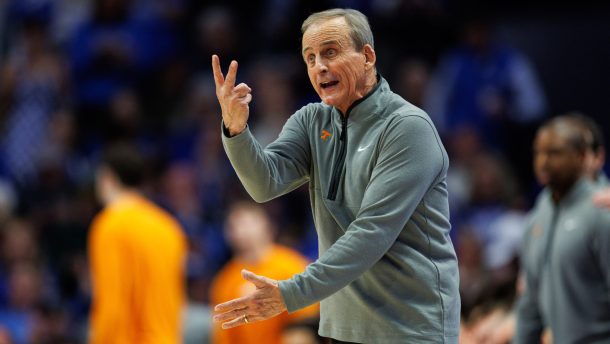
Tennessee: Ball security
Like Mizzou, Tennessee has struggled to keep hold of the ball this season. The Vols have a turnover rate of 18.3% this year. Perhaps even worse, Tennessee has an offensive steal rate of 11.2%, meaning the Vols are consistently conceding live-ball turnovers. Cleaning up the turnovers would lead to meaningful improvements in efficiency on both sides of the ball.
Texas: Pace
Texas has an elite offense, but the Longhorns operate slowly. They’re averaging a staggering 19 seconds per possession during conference play, according to KenPom. That’s the slowest pace in the SEC. On some level, this might not matter — Texas also leads the conference in adjusted offensive efficiency, after all. But we’ve seen slow-paced teams under-perform in the NCAA Tournament before. With how efficient Texas is offensively, it would seem that creating opportunities for more possessions would decrease the chances of an early-round exit.
Texas A&M: 3-point attempt rate defense
Earlier this week, I complimented Texas A&M on its extraordinary shot diet that focuses on highly-efficient shots. Defensively, though, it’s another story. The Aggies are 266th nationally in 3-point attempt rate defense. They’re also giving up too many shots near the rim, as their opponents’ average 2-point shot distance is just 5.6 feet from the basket (ranking 278th). However, this is what Bucky McMillan’s defenses often looked like at Samford, too. And to the Aggies’ credit, they’re limiting opponents to just 32% 3-point shooting so far this season.
Vanderbilt: Rebounding
I really like this Vanderbilt team. I could make the case this is the best team in the SEC — not Florida or Arkansas. When you pull up Vandy’s statistical profile on KenPom or BartTorvik or any other site, it’s pretty difficult to find a significant weakness. Rebounding, though, has been a problem in SEC play at least. The Commodores are 14th in offensive rebounding rate and 10th in defensive rebounding rate since the start of conference play. Not a disaster, but not ideal, either. Vandy only plays 1 player taller than 6-foot-7, so it makes sense that rebounding would be a struggle. But the Commodores generally make up for it another areas, often winning turnover and free throw margins by a meaningful amount.

Spenser is a news editor for Saturday Down South and covers college football across all Saturday Football brands.