
We’ve entered the bleak midwinter grind of the college basketball season.
Three weeks of SEC play have come and gone, but March remains a distant dream.
College football is over (congrats to the incredible story that is Indiana!), which means more eyes are on hoops, but there’s still a “bring your own energy” feel in some arenas and gyms, especially on cold winter Tuesdays and Wednesdays.
League play is a grind. Survival of the fittest, both physically (ask Nate Oats, who I’m sure would love to have a healthy team at some point in his adult life) and mentally (SEC road teams went 2-6 on Tuesday and Wednesday this week).
There’s a 6-team logjam of teams with 2 SEC losses or fewer through 1/3 of the SEC slate. But parity is still the order of the day, with 8 SEC teams ranked in the top 32 of KenPom (more than any other conference) and 11 SEC teams ranked in the top 50 of the NET Rankings (a top 50 NET ranking is critical for an NCAA at-large berth).
Wondering who will survive the grind, here are 10 things I’m absolutely overreacting to after 3 weeks of SEC basketball.
Opening Tip: What to make of the Charles Bediako situation at Alabama?
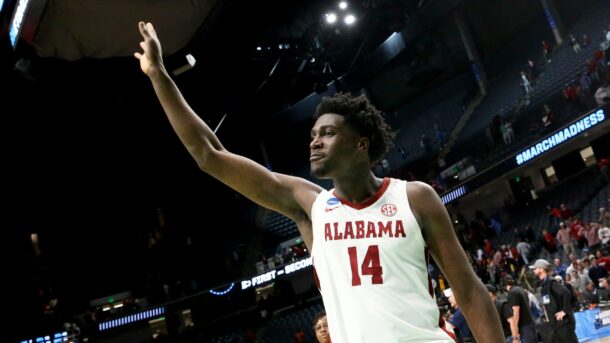
Former All-SEC defensive team Alabama center Charles Bediako, who has been plying his trade in the G League for the past 3 seasons, has re-enrolled at the University of Alabama. On Wednesday, Tuscaloosa County Circuit Court Judge James H. Roberts (who also teaches law at Samford University’s Cumberland School of Law, not Alabama, as I’ve seen alleged on social media), granted a petition for a temporary restraining order (TRO) against the NCAA, making Bediako immediately eligible to play basketball for the Crimson Tide. The TRO remains in effect until January 27, when a hearing for a preliminary injunction can be held to determine whether Bediako should be eligible to play for the remainder of the season.
Bediako’s attorneys, led by the outstanding sports lawyer Darren Heitner, maintain that Bediako should receive eligibility for a number or reasons. Most notably, their petition states that in 2023, when Bediako elected to leave Alabama and remain in the NBA Draft, “the resources available to student athletes” in terms of NIL compensation “were nowhere near as robust as they are today, which would have influenced Mr. Bediako’s decision to stay in school rather than leave for greater financial pursuits elsewhere.”
The Complaint also notes that the recent House settlement has “fundamentally altered the economic landscape of college athletics” and created revenue-sharing opportunities Bediako did not foresee in 2023. Citing to the recent decision of the NCAA to grant eligibility to players like Baylor’s James Nnaji and Santa Clara’s Thierry Darlan, who both played professionally in the G League and internationally, Bediako argues that the NCAA has “taken the stance that participation in NBA G League games does not render an athlete ineligible for future competition.” On the key issue of whether Bediako’s remaining in the NBA Draft forfeits his future NCAA eligibility, Bediako argues that the decision to grant eligibility to Nnaji, who was drafted 31st in the 2023 NBA Draft (the same draft in which Bediako went undrafted), means the NCAA has “determined that a player’s entering and remaining in the NBA Draft does not render the student-athlete ineligible for future NCAA competition.”
NIL and sports lawyers have forecasted a lawsuit like Bediako’s since the Nnaji decision, largely because while there is a skill distinction between NBA players and G League players like Bediako, there is not necessarily a legal distinction between them: both types of players are professionals playing in unionized professional leagues. In other words, how do you justify permitting a player drafted to the NBA, such as Nnaji, returning to the college ranks but not a player like Bediako, who signed multiple NBA 2-way contracts but went undrafted?
The NCAA may argue that Bediako’s case is different from every other case considered to date because Bediako already played college basketball and did so at a time when he (1) had NIL opportunities and (2) was aware of the NCAA’s rules regarding forfeiture of future college eligibility for college players who declare and remain in the NBA Draft. That argument is technically correct.
The question for a court will be whether a player like Nnaji, who immediately turned professional and played extensively in professional leagues, to whom the NCAA’s prior college enrollment rule never applied, is somehow legally different than a player like Bediako, who played 2 full years of college basketball and then went professional. That may be a tough needle for the NCAA to thread, but it seems a more viable path for the NCAA than defending some mystical difference between an “NBA Contract” and the type of contract signed by a player like Nnaji in a high-level league in Europe.
A player failing or only obtaining modest financial success professionally and returning to college certainly rips the veneer off any remaining romantic ideals of amateurism. But taken to its logical end, allowing players like Nnaji to play opened the floodgates for the end of the legal concept of “collegiate eligibility.” situation. But Oats and Alabama aren’t the ones creating the lawlessness — they are simply navigating and surviving in a system where there are no real rules.
Does Bediako make Alabama the SEC favorite?
Given Judge Roberts’ ruling on the TRO, the basketball side of the Bediako story must be evaluated, and the short answer to the question above is “Probably.”
A few wise writers (and this scribe, who is occasionally correct) wondered aloud in the preseason whether Oats had done enough in the frontcourt to make Alabama a bona fide Final Four contender for the fourth consecutive season. Those questions have swelled to righteous criticism as the season has progressed on the Capstone.
Yes, Alabama’s had injuries. Again.
But the Crimson Tide have also struggled inside, especially on the defensive glass, where they rank a woeful 289th in America entering Saturday’s matchup with Tennessee. Aiden Sherrell, as skilled a big as Oats has ever had, continues to make progress. He scored 21 points and grabbed 9 rebounds in Alabama’s furious comeback win at Oklahoma last Saturday, and he was brilliant (22 points, 5 rebounds, 8 fouls drawn) in a ship-steadying win at Mississippi State.
But Taylor Bol Bowen has struggled defensively (ranking in the bottom third of SEC bigs in defensive box-plus minus) even when healthy and Noah Williamson, the Patriot League Player of the Year in 2024-25, has not been up for the jump in competition.
Bediako, the anchor of Oats’s best defensive team in Tuscaloosa, fixes that immediately. He gives the Crimson Tide an elite offensive rebounder (grabbing 14% of misses while on the floor as a sophomore) and paint defender who will beautifully complement the more mobile Sherrell and help seal for Alabama’s best weapon, a driving Labaron Philon.
Adding Bediako immediately makes Alabama the league’s most balanced roster, and in our view, one of the SEC’s championship favorites along with Florida and Arkansas.
Vanderbilt loses 3 straight games. Is it time to worry?
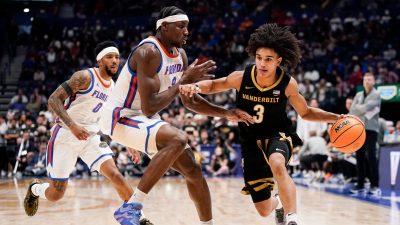
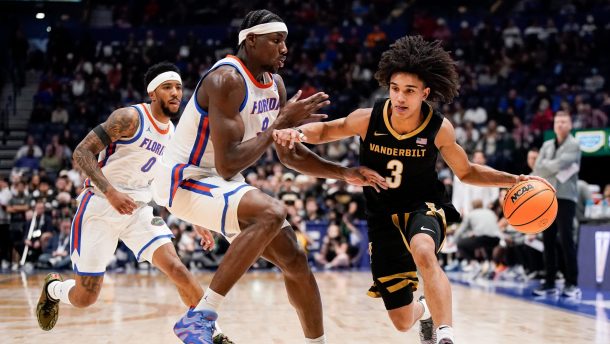
After a well-played, nip-and-tuck home loss to Florida on Saturday, Vanderbilt was blasted 93-68 by Arkansas at Bud Walton Arena on Tuesday night, suffering a third-consecutive defeat after a 16-0 start.
Still, it’s far too soon to be deeply concerned about the Commodores.
Vanderbilt’s weakness entering the season was always going to be playing teams with elite size, and the Commodores faced 3 of the SEC’s biggest front lines in Texas, Florida, and Arkansas. Vanderbilt lost the rebounding battles in those games by a combined 121-77. Vanderbilt “only” lost the offensive glass 34-26 in those games, but that’s still 8 extra possessions where the smaller Commodores had to guard for an additional 20 seconds. More concerning was the way Vanderbilt’s guards allowed dribble penetration consistently, especially in the Arkansas game Tuesday night and the Florida game at home, where guards Darius Acuff Jr., Xaivian Lee and Boogie Fland seemed to get into the paint at will throughout the evening.
Vanderbilt faces a far less imposing Mississippi State team on Saturday, and then hosts Kentucky, who is only an average rebounding basketball team. If the Commodores struggle in those games, we’ll re-evaluate. But for now, Mark Byington’s team remains top 10 nationally in offensive efficiency and a top 25 3-point defense. They have their kryptonite, but it isn’t a night-in, night-out problem.
At Arkansas this season, is the ceiling the roof?
His Airness played at North Carolina, of course, but his iconic “The Ceiling is the Roof” remark might as well have been about the 2025-26 Arkansas Razorbacks.
Darius Acuff Jr. is the SEC’s best freshman since Brandon Miller. He’s averaging 19.6 points and 6.2 assists per game, eclipsing 20 points or more in 3 of Arkansas’s 6 SEC games and scoring at least 17 points in each SEC contest.
Talk of SEC Player of the Year honors is premature until Arkansas demonstrates it can win road games (the Hogs were pounded 90-76 at Georgia Saturday in their latest road game failure), but Acuff Jr. is the sun around which the one of the most potent offenses in the SEC (6th in KenPom, 5th in Bart Torvik) orbits.
Acuff Jr. is the star of a Razorbacks team loaded with future pros. Meleek Thomas is currently slotted as a second round pick by most mock drafts (39th in the latest No Ceilings Mock), averaging 15.2 points per game in his own right. Billy Richmond, a physical wing who is one of the SEC’s best defenders, is also projected as a draft pick in most mocks, slotting in just behind Thomas. Add Karter Knox to the rotation and the Hogs could have as many as 4 players drafted this summer, and that’s without head nods to the extremely effective and efficient Malique Ewin (62% on 2-point field goals) and jack-of-all-trades Trevon Brazile (top-100 nationally in offensive and defensive rebounding percentage, 40% from 3-point range with 22 makes).
Arkansas’s inability to defend well against elite teams is puzzling, even allowing for the youth of their guards. Ewin, Brazile, and reserve Nick Pringle have been around the block, and Richmond should be an All-SEC defensive team guy. But John Calipari teams historically figure things out on that end, and if this group does the same, they are certainly talented enough to make a run to Indianapolis come March, where playmaking guards win the day.
Mike White reinvents himself at Georgia
There’s a colorable argument that Georgia head coach Mike White is one of the most underappreciated head coaches in college basketball.
Let’s just stick with the numbers: White has never suffered a losing season, won over 300 games at a 64% winning percentage, and he has a winning record in the NCAA Tournament (6-5) with an Elite 8 appearance (Florida, 2017). He’s won 60% of his SEC games in his 11 years as a SEC head coach. He’s won conference coach of the year in 3 different leagues (WAC, Conference USA, SEC).
Despite this success, he’s often viewed through a cynical lens. His later Florida teams and first 3 Georgia teams didn’t play an aesthetically pleasing style of basketball, often playing a plodding halfcourt style that engendered low-scoring games and thin margins for error. Long a talented recruiter, White has also faced criticism that his rosters lack identities even if they feature future NBA talent. Some of those criticisms were warranted, especially late in White’s tenure at Florida, where Gators teams with NBA talents like Tre Mann, Colin Castleton, and Andrew Nembhard consistently fell short of analytical expectations and did not compete for SEC championships.
The 2025-26 Georgia Bulldogs are breaking that mold.
White has gotten back to his quick-tempo, guard-heavy style that helped him win 27 games or more his last 3 seasons at Louisiana Tech.
His roster, filled with advantage creating-guards who can find their own shot surrounded by an elite big in Somto Cyril and an NBA wing in Kanon Catchings, creates mismatches all over the floor. The Dawgs are a thrilling watch, ranking first in the country in tempo and points per game (94.8). The result has been a team that’s terribly difficult to prepare for and brutally hard to guard.
Humble and kind, White deflects praise and insists the Dawgs can get better.
“It’s better to be ranked than unranked, I guess,” White said recently when asked what he thought about Georgia being ranked in the top 25 for a second consecutive season after a 14-season absence from the AP Poll. “We better worry about getting better.”
White’s Dawgs are getting better.
After Florida throttled Georgia 92-77 in Gainesville earlier this month, Georgia has won 3 of 4, including a 90-76 win over ranked Arkansas at Stegeman Coliseum last Saturday. Georgia heads to Texas — where it can secure another Quad 1 win — with an impressive 7-2 mark against Quadrant 1 and 2 this season, well within the NCAA Tournament field. Win at Texas, and suddenly White’s Dawgs will hit a 4-game stretch with 3 games at home, including a rematch with the hated Gators. Rip off 4 of the next 5, and suddenly you are talking about a SEC title contender in Athens.
Heady times. But hard-earned for a coach who self-evaluated, made changes, and is seeing them pay dividends.
Team of the Week: Florida Gators
The reigning national champions are back.
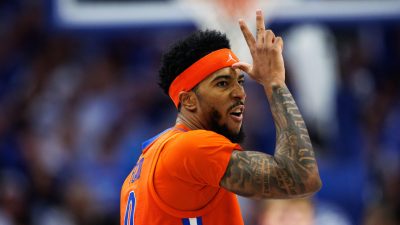
The Gators forgot Boogie Fland and Xaivian Lee’s jerseys before a tough road game at Vanderbilt this weekend, but with Fland wearing teammate Cooper Josefberg’s 33 and Lee wearing number 99, the Gators left a sold-out Memorial Gym with a 98-94 win and a share of first place in the SEC.
The Gators are now the SEC’s top-ranked team analytically (8th in Torvik, 10th in KenPom) and the projected SEC favorite, pegged with a league-leading 45% chance of claiming the conference title based on future schedule by the website CBB Analytics.
Florida’s frontcourt, recently led by Rueben Chinyelu, who posted a monstrous 15 points and 21 rebounds in Florida’s 79-61 rout of LSU midweek, has been consistent all season. But it’s the step up in play from Fland, Lee, and reserve guards Isaiah Brown (14 points, 4 rebounds vs. Vanderbilt) and Urban Klavžar (18 points, 5 three pointers made vs. LSU) that have changed Florida’s high floor into a lofty, Final Four-caliber ceiling.
A great week for the reigning champs, who have weathered tough defeats facing arguably the nation’s toughest schedule (nation-high 10 Quad 1 games) to find themselves the SEC co-leaders in mid-January.
Player of the Week: Denzel Aberdeen, Kentucky
Last week’s winner, Rueben Chinyelu, easily could have been the choice again this week. Texas A&M big man Rashaun Agee, who averaged 20 points per game in the Aggies wins over Texas and Mississippi State, also warrants mention. Agee has earned 6 KenPom game MVPs this year for Bucky McMillan’s Aggies and is a big reason Texas A&M is a SEC contender in Year 1.
But the winner this week is Aberdeen, who is playing like the champion he is and has keyed Kentucky’s recent turnaround.
The senior transfer from Florida poured in 22 points in Kentucky’s come from way behind win at Tennessee, nabbing 2 steals and dishing out 2 assists without a turnover in the win. He followed that up with a 19-point performance in Wednesday night’s win over Texas. Aberdeen started SEC play with 2 stinkers — both Kentucky losses. In Kentucky’s 4-game win streak, Aberdeen averaged 18.5 points per game, dished out 3.8 assists per contest, and connected on 23 of his 27 free throws, many of which came in crunch time of 3 Kentucky wins decided by a total of 8 points.
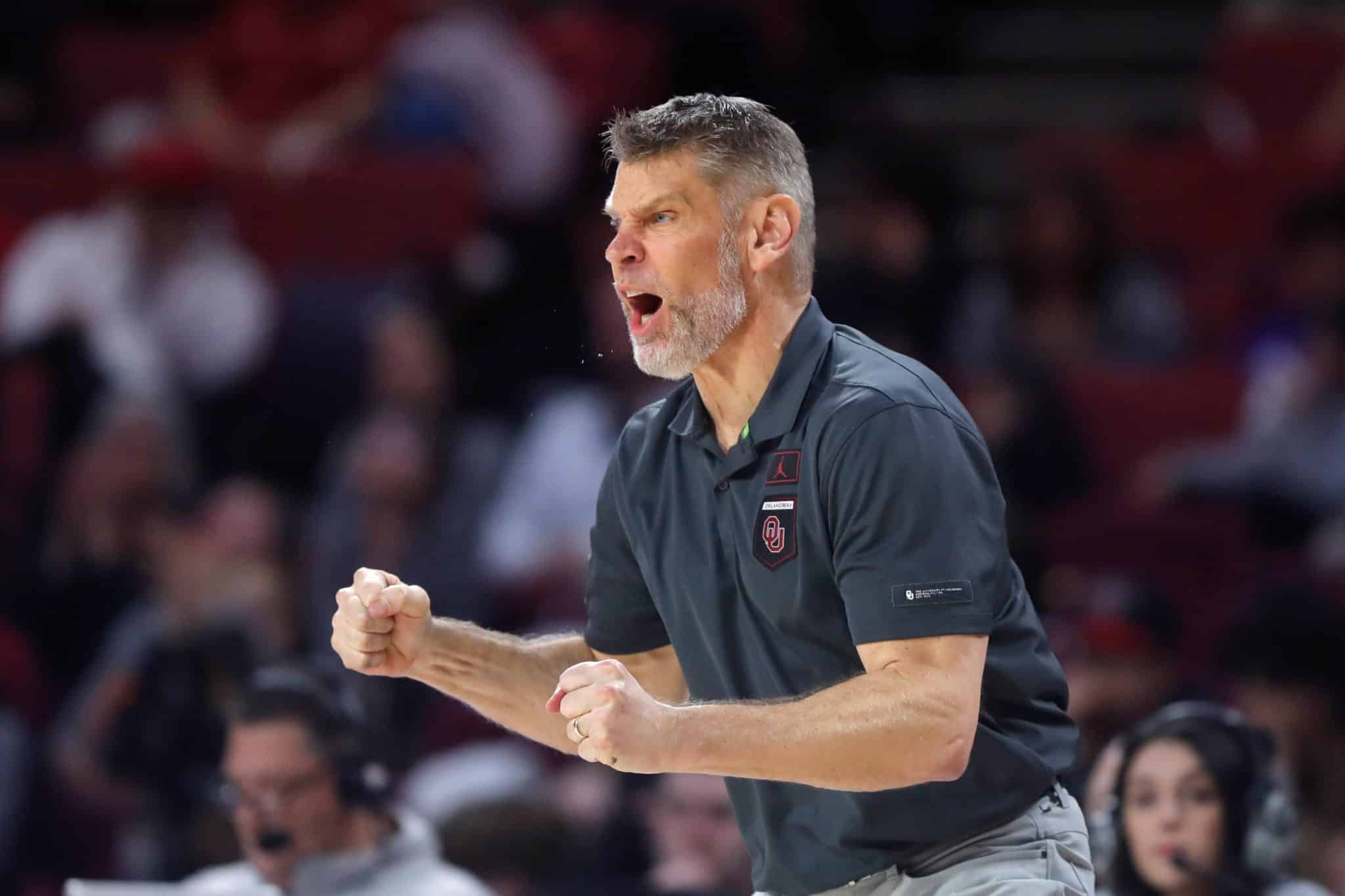
Mark Pope told SDS before the season that Aberdeen was absolutely brought to Lexington as a culture-builder.
“He’s a champion, a different level of competitor. He has an infectious spirit and an understanding of winning,” Pope said.
The senior has shown it this week, helping rescue Kentucky’s season in the process.
Stat of the Week: 7 double-doubles
As in 7 double-doubles in the last 8 games for Florida’s Rueben Chinyelu, who has 4-straight double-doubles, and Texas A&M’s Rashaun Agee.
Chinyelu’s 11 double doubles rank 5th nationally this season and first in the SEC, while Agee, with 8 double-doubles, ranks second in the SEC and 20th nationally. Pretty remarkable stuff for 2 players who didn’t appear on many All-SEC ballots in the preseason media vote.
Where to Eat on a SEC basketball weekend in: Austin, Texas
It’s tough to pick just one spot in ATX, one of the most vibrant food scenes in America, let alone the SEC. But let’s say you wanted the best tacos you’ll find in the SEC. Where would you go? The answer is La Santa Barbacha, a food truck parked on Manor Road within walking distance of the Moody Center, which will be stuffed to the gills on Saturday when No. 21 Georgia visits Texas (1 p.m. ET, SEC Network). Grab a Horchata with fresh strawberries if you want a delicious rendering of a Mexican classic but don’t want a taco. Otherwise, I recommend the Quesabarbecha, which is a quesadilla with crunch cheese on the edges filled with a tender, perfectly seasoned and portioned barbacoa. There’s covered seating and tables, so don’t worry about the fact it’s “just” a food truck. There’s time to enjoy the scene and with a number of tortilla options, plenty of ways to indulge in the offerings at the SEC’s best taco spot.
The SEC’s 10 NCAA Tournament teams will be:
Florida, Alabama, Arkansas, Vanderbilt, Texas A&M, Georgia, Kentucky, Auburn, Tennessee, and Texas.

Neil Blackmon covers SEC football and basketball for SaturdayDownSouth.com. An attorney, he is also a member of the Football and Basketball Writers Associations of America. He also coaches basketball.