SEC 360: After ‘Show Your Butt’ Saturday, is it time to rethink anger in sports?

By Al Blanton
Published:
I love to surf through YouTube videos of coaching meltdowns.
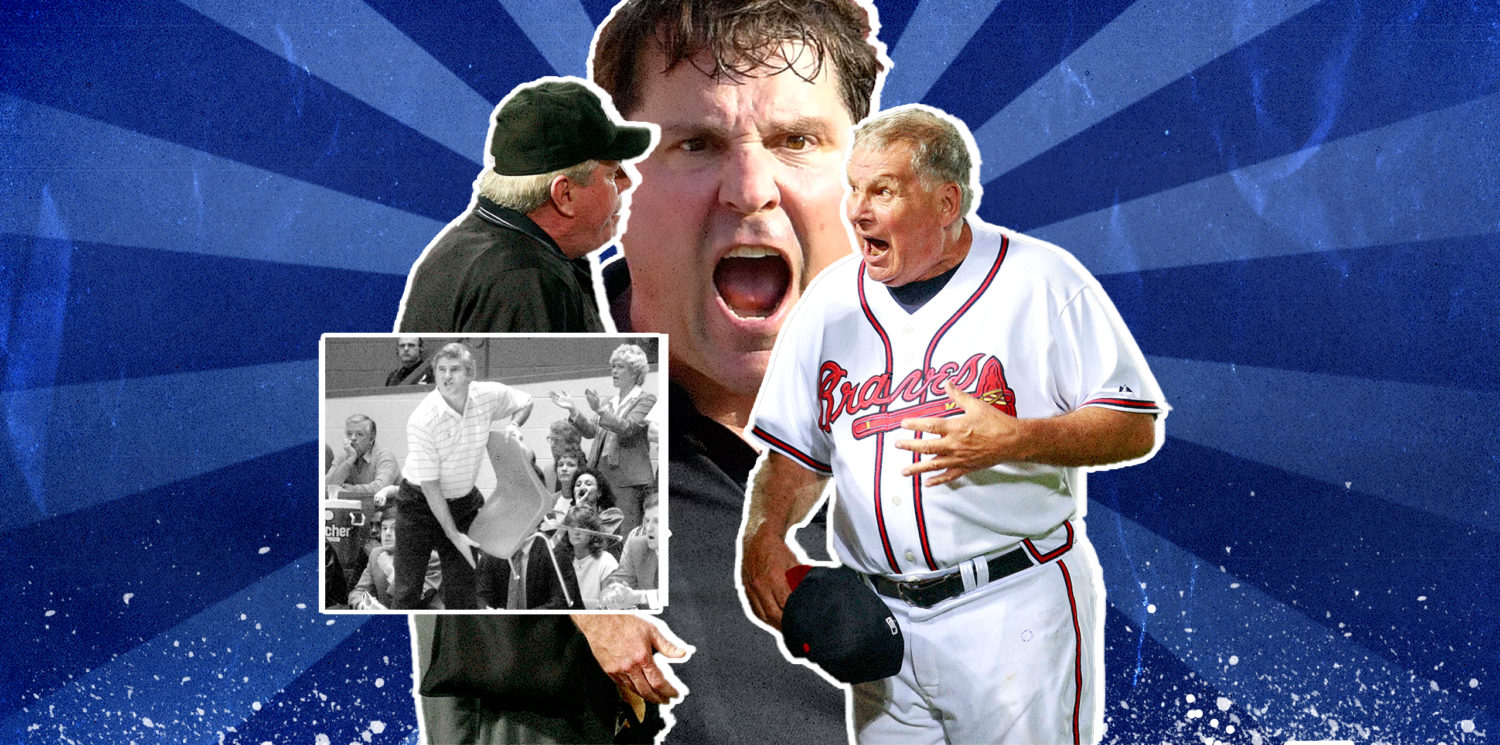
From Billy Martin pouring field dirt on an umpire to Lou Piniella kicking his cap to Mike Gundy’s “I’m a Man! I’m 40!” rant, I always seem to get a chuckle out of watching coaches detonate on camera.
For all intents and purposes, last weekend was “Show Your Butt” Saturday in college football, and LSU quarterback Joe Burrow embodied the literal application of that phrase. Metaphorically speaking, I watched as several coaches showed their butt, coming unglued at poor officiating, offensive ineptitude, and a handful of other gridiron stimuli.
Seeing Burrow’s white tuchus was a funny moment, but nobody was laughing at the coaches’ behavior.
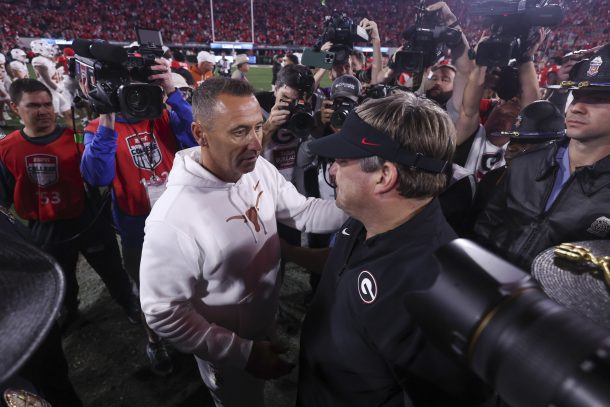
Because I have the luxury of a Wednesday deadline for a Friday article, I have been able to ingest a full helping of America’s commentary on the “facemask-tug-heard-round-the-world” that occurred Saturday night at Bryant-Denny Stadium in Tuscaloosa. Thoughts fell on both sides of the fence, some siding with Tennessee coach Jeremy Pruitt, perpetrator of said facemask yank, others siding with player safety. Hardline old-schoolers saw no problem with it; “just football,” they shrugged. Others, taken aback by a coach touching a player, called for Pruitt’s head on an orange platter and wondered if the player-coach harmony had been permanently severed.
Personally, I thought the helmet grab was the culmination of a series of events that caused Pruitt to enter a crazy cycle of anger. Throughout the game, I watched his overall demeanor as the Vols were whistled for 13 penalties. I watched his posture as the frustration began to mount and mount, and I believe everything spilled over when quarterback Jarrett Guarantano went rogue and fumbled into the end zone, leading directly a Tide touchdown. From my vantage point, there were moments in the game it appeared as though Pruitt might become completely unglued, and the Guarantano blunder was the final straw.
“Just passion,” you say. “Love the way he’s trying to fire up his team.”
Maybe. But maybe there’s something deeper we ought to explore as fans and as a society as a whole. Stay with me.
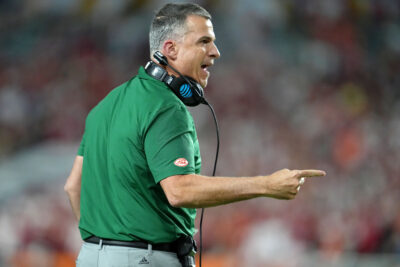
Earlier in the day on Saturday, South Carolina head coach Will Muschamp had to be restrained after officials blew a call in the Florida-South Carolina game that gave the Gators a touchdown (and ultimately, the game). Muschamp’s ire drew an unsportsmanlike conduct penalty in the process and later he railed on the “gutless” official who did not drop the flag at his feet. Given the circumstances, nobody really blamed Muschamp for getting angry, but this isn’t the first time he almost blew a gasket during a game. Remember when he was the defensive coordinator at Auburn and drew an unsportsmanlike conduct penalty in the Iron Bowl?
Here’s a quick clip to jog your memory.
And the last example from Saturday: Ole Miss offensive coordinator Rich Rodriguez, who threw his second temper tantrum of the fall in the press box in Oxford. This latest episode was not quite as childlike as the first one, which occurred in Tuscaloosa on Sept. 28, but nevertheless caught the eye of the camera and was posted online. Here’s that clip.
You may ask, “Are these egregious examples of coaching rage?” Absolutely not.
But do the instances, taken in the collective, warrant discussion? Absolutely.
As I began to pull back from this weekend, my thoughts began to churn about anger in sports. In processing this from a big-picture standpoint, I concluded that anger has become an accepted part of athletics. Coaching blowups, butt-chewings, and in-your-face screaming is just part of the game, right?
Well, it doesn’t have to be. And it shouldn’t be.
A few years ago I interviewed former Texas A&M head coach R.C. Slocum, who held the philosophy, “Never put your hands on a player.” Slocum, 74, comes from the old school and developed his philosophy of this coaching subset under former Kansas State head coach Vince Gibson. Here’s what Slocum said:
“He stressed that there was never a time to curse a player or put your hands on him. He said, ‘First of all, they ought to be too big and strong to put their hands on. They’re somebody else’s son. These are our guys. Some mother and father entrusted their prized possession to us. Work ’em as hard as you want. Be demanding, but never demeaning.’ Those were guidelines I kept throughout my career.”
Seems like a good rule of thumb to me.
I grew up in the old school, too, and I’ve heard stories about coaches punching, kicking and slapping players. That was the football culture of the 1970s and 80s.
But we live in a different time, and coaches just cannot afford to put their hands on a player.
Not to drag up old news, but remember Nick Saban’s “love tap” of AJ McCarron’s buttocks several years ago?
Here’s what Saban said in the aftermath: “I’m not apologizing for anything that I did, to be honest with you. AJ doesn’t have a problem with it. Nobody else should have a problem with it. I’ve been getting patted on the ass since 9 years old, playing Pee Wee football. So if you don’t like that, I guess you should watch the Golf Channel.”
No one said another peep, and we let it go. But in light of this past week’s discussion, how do you view that exchange now that we are 9 years removed from it?
Anger has covertly buried itself in our society as a venial sin, something that’s a natural extension of the human condition. It just happens, we shrug. Husbands get mad at their wives, wives get mad at their husbands, dads get mad at their sons, coaches get mad at their players and round and round we go. Civil discourse is deathly ill and points-of-view we don’t agree with are met with vitriolic Facebook rants. And when an angry person unloads, my, do they unload — word-ninja-ing a person’s whole life because they typed a few words in on a Macbook and hit the enter button.
Sports commentaries can evoke particular disgust, and the hate poured out on social media can be alarming. What we fail to realize is this is often a reflection of nothing else than the corrosion occurring within.
America is angry. Though domestic violence, child abuse, school shootings, kidnapping, rape and other violent crimes are more prevalent than ever, rarely is causation attached to compounding anger, bitterness, or rage. I’m not trying to be hyperbolic here and suggest that college football coaches are responsible for our society’s travails. I’m saying that anger is a real problem in our society, an unaddressed problem and sometimes coaches are the poster-children for it.
As consumers, we become indirectly responsible by accepting or laughing at these misdeeds. America’s collective mind has demonstrated the ability to shift, and I believe a re-think needs to occur with respect to how we view coaching blowups and meltdowns — and anger in sports as a whole. Chair throwing is not cute. John Chaney trying to fight John Calipari at a postgame press conference is not funny. Billy Martin smashing a table-full of potato salad with a fungo bat is not a belly-splitting riot.
And grabbing or dog-cussing athletes should not be tolerated.
Not only that, but we often praise coaches for their lividity. Fans laud former Braves manager Bobby Cox for being the all-time leader in ejections in MLB history with 161. Why?
Look, I get it. He’s trying to stand up for his team. But could he have exercised a bit more restraint without getting tossed and still had his team’s back? Perhaps.
Ballgames are super emotional, and coaches must navigate the highs and lows innate to the profession. There are bad calls, fumbles, blunders and errors. Most coaches are able to keep their composure in check, but sometimes they cross the line. I think coaches should remember that players are impacted by their actions, and it’s important to set a positive example for these young people to follow. After all, human beings mimic what we are shown, and it’s not OK to blow up just because a situation is not going your way.
Before I became a writer, I was a college basketball coach. Before taking up the mantle of that worthwhile profession, I had wrongly concluded that you had to use foul language and anger — if not wrath — as a means to motivate your team. Ten years removed from coaching, I shudder at some of the things I said to my players in the heat of the moment and pray to God they have forgiven me. It wasn’t right, and often I wonder what sort of lasting blemish I made on those impressionable souls who now are undoubtedly fanned out all over America. Every day I live with those screaming lambs, hoping I was able to save just one or two from the executioner of me.
The fact is, true manhood does not demonstrate itself by blowing up at a player on a football field or basketball court. It does not rear its tremendous head by slamming a headset into the turf or taking an early exit to the showers because you couldn’t control your temper. It is not revealed by dropping F-bombs and GD’s in order to produce the desired outcome during a ballgame. It’s not displayed by tearing up the locker room or going berserk when a player makes a mistake.
When writing this, I assumed the risk that my point-of-view might be a bit too straitlaced for many of you. Perhaps I’m being a bit prudish, if there is such thing in college athletics.
Laissez-faire! you say. Let the coaches do as they please!
My point is, there is a distinction between controlled aggression and recklessness. There’s a difference between arguing your point and being out of control. There’s a difference between a rant and a meltdown. There’s a difference between spewing unmitigated bile on impulse versus passionate admonition.
My hope through writing this is that we, as a society, will begin to realize the real perils of anger. That we will investigate the anger present in our own lives that, left unchecked, can spill out in a variety of hurtful ways. That we will no longer think it funny when coaches totally lose it on the sidelines.
Anger and rage are serious problems in our country. And that’s nothing to laugh at.
Al Blanton is the owner of Blanton Media Group, publishers of 78 Magazine and Hall & Arena.