Undefeated. Unexpected. Unforgettable. ‘Nobody expected that 1998 team to be special.’ Turns out, the Vols were perfect

By Dave Hooker
Published:
Editor’s note: Welcome to Tennessee Week. Our special series — “Undefeated. Unexpected. Unforgettable.” — celebrates the 20th anniversary of the Vols’ 1998 national championship season.
Tennessee had fallen short with Peyton Manning. Now he was gone. Even their head coach wasn’t sure what to expect in 1998. The Vols could finish 7-4 or 6-5, Phillip Fulmer warned them. Motivated, The Replacements authored the perfect response.
Tennessee’s 1998 national championship team took part in some of the most iconic games in UT’s storied history. The games were just part of the story. The journey started much earlier.
The Vols’ final two games of the 1997 season set the tone for the Vols’ run at perfection the following year. It began with the birth of a leader at halftime of the SEC Championship Game as the Vols faced getting upset by Auburn.
“I remember us not playing our best football in the first half. I do remember that very vividly,” linebacker Al Wilson said recently. “I remember going into the locker room at halftime and the vibe just wasn’t the vibe we normally had at halftime.”
The Vols didn’t seem excited for the second half. Wilson’s fiery speech helped spark a frantic comeback that secured an SEC title for the first time since 1990.
“Once you win one, you want to continue winning them,” Wilson said. “It fueled the fire. It was the fuel that we put on that fire for that 1998 season. Even though we lost so many great players going into the ’98 season, we still knew that we had a helluva football team. We still had some players that could really play and some of the best players in the country.”
Those players didn’t play like the best players in the Orange Bowl. With a possible national title at stake for Nebraska, the Cornhuskers hammered the Vols 42-17. That was more fuel for the fire leading into 1998.
“Let’s be completely honest,” Wilson said, “Nebraska just kicked our butt hands down. They manhandled us. … That particular game showed us that we had some work to do. In the offseason, we needed to get bigger. We needed to get stronger. We needed to work harder. We needed to be more in tune to what our jobs are. And we needed to hold each other accountable.
“That’s kind of the approach we took into the 1998 season. Everybody do their job because if you don’t, we will hold you accountable. We’re going to call you out if you’re not doing it. That was the beautiful thing about the ’98 team. You didn’t have to worry about the coaches getting on players for not doing their jobs. It was going to be your teammates that were going to let you know.
“Do your damn job and that’s it. Don’t try to do to much. Do your job and we’ll go from there. That was our approach. That’s the love I have for that ’98 team because it was strictly business.”
With a new leader in place and the sting of the Orange Bowl humiliation still resonating, the table was set for one of the most unlikely national title runs in college football history.
“No one expected us to win. It was an us against the world mentality. … It was like we were the replacements. We had all this superstar power the year before, but what they failed to realize is we worked just as hard. We just hadn’t had a chance to play.”
— Fred White, safety
The list of players lost from the 1997 team is astounding. The Vols had eight players drafted by the NFL following the 1997 season, including Peyton Manning, who was the first overall pick. The Vols also lost cornerback Terry Fair and receiver Marcus Nash, who also went in the first round. That was just the beginning.
Defensive linemen Leonard Little and Jonathan Brown were selected in the third round. Offensive lineman Trey Teague and receiver Andy McCullough were selected in the second round.
The Vols were ranked No. 10 in the preseason AP Poll, but there was no reason to believe they could accomplish more than reach the SEC Championship Game again in 1998. That was a reasonable goal considering all of the losses. Winning an SEC title seemed a bit lofty. Competing for a national championship wasn’t even in the conversation — except for those in Tennessee’s locker room.
“We weren’t really expected to do that much,” former UT coach Phillip Fulmer said last month. “It was fun to watch them come together in spring practice. We were having our struggles offensively, but we were a good kicking team and a good defensive team, so we had a chance. As we continued to develop our passing game offensively, the defense kind of carried the load. … They were selfless and hard workers.”
Building a passing game was indeed a struggle. The Vols had to change philosophies completely. Manning had the ability to break down a defense. In essence, he was a coach on the field. His replacement, Tee Martin, was a strong-armed quarterback with the ability to extend plays with his running ability.
“I didn’t think we could be what we were with Peyton and I was right,” former UT offensive coordinator David Cutcliffe said. “I just didn’t see that as a remote possibility, but I couldn’t put my finger on what we had to do to be special. I think our players helped guide us in that direction, but I had a lot of concerns offensively as we were moving forward.”
Said Fulmer, “We couldn’t make a first down in spring practice. It was rough. One, our defense was very good. Two, we just couldn’t find that consistency (on offense).”
No one needed to tell UT’s defensive players that the offense was struggling. The topic came up in a defensive meeting shortly after spring practice.
“We were talking about how we were going to have to play better than the offense every game simply because we had a new quarterback,” Wilson said. “When you lose Peyton Manning, I don’t give a damn who you put in after that, it’s not going to be at that level at that point.
“Tee Martin did a helluva job running the offense and making plays, but he wasn’t Peyton Manning. We knew we were going to have to go out and make plays on our side of the ball.”
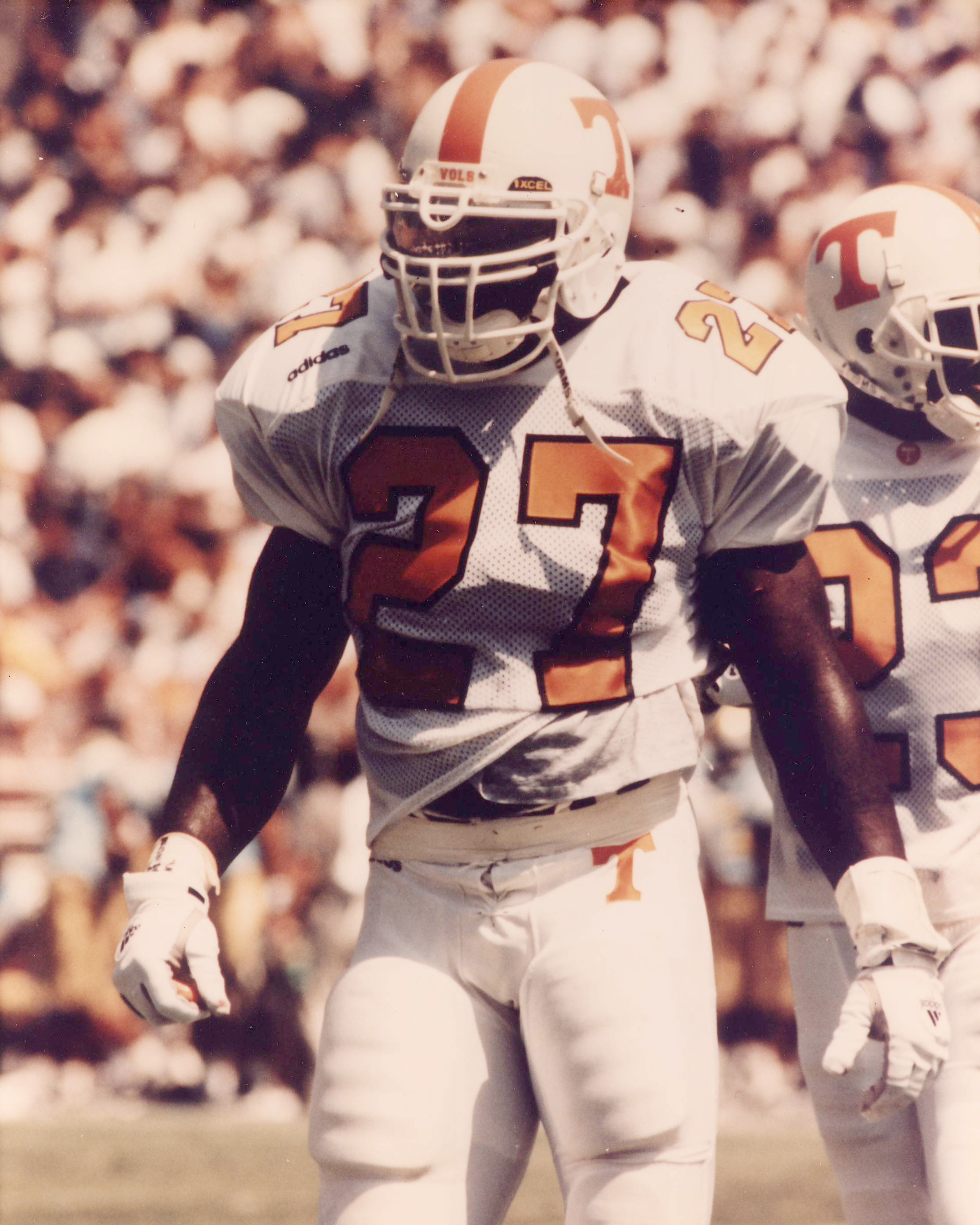
Wilson and his teammates only knew one thing to do with the deck stacked against them. Work, work some more and work hard. The season was pressing upon them and the doubters were aplenty.
“Coming into that year, there were a lot of red flags,” safety Fred White said. “There were a lot of things said about us as a team, that we couldn’t get it done without Peyton and we couldn’t get it done without those guys. It was a slap in our face because we had been chomping at the bit waiting on our chance to get an opportunity to show what we could do. … No one expected us to win. It was an us against the world mentality.
“It was like we were the replacements. We had all this superstar power the year before, but what they failed to realize is we worked just as hard. We just hadn’t had a chance to play. Back then, Tennessee stockpiled recruits. We were just like Alabama today. We had a group of guys that could step in and start for most teams in the country. We felt disrespected so we banded together as a team. That camaraderie and that chemistry was what helped through all of that.”
“Tee Martin did a helluva job running the offense and making plays, but he wasn’t Peyton Manning. We knew we were going to have to go out and make plays on our side of the ball.”
— Al Wilson, linebacker
The Vols headed into summer workouts determined to raise their game to another level. Manning had famously instituted “voluntary” offseason workouts at during his career because the NCAA doesn’t allow offseason workouts to be mandatory. However, if you wanted to play in the fall, working out in the summer was absolutely mandatory.
The 1998 team took Manning’s vision to another level. The Vols didn’t just hold summer workouts. They held summer practices.
“We were having full blown practices with no pads,” White said. “And we were going hard. When we got to practice in the summer, that (preseason) camp was a breeze. Football season? That was a breeze because we practiced so dog gone hard. We demanded perfection.”
Perfection meant more than just working out. The Vols had the option to work out in the afternoon or early in the morning. In truth, there was no option.
“If we saw you working out later in the afternoon, we knew you weren’t committed,” White said. “You’re not here with the rest of the team working out in the early morning?”
That philosophy bled into preseason camp. Team leaders would go to UT’s coaches and tell them who wasn’t practicing hard.
“We all wanted to work hard for our position and we did,” White said. “It made us better as football players. It made us closer as teammates and our chemistry was so much different because we saw the hard work everyone put in. If you didn’t put in the hard work, we did not want you on our football field. I’ve got a lot of teammates that I love to death and I would never say their names, but some of those guys didn’t work hard. That’s why some of those guys didn’t play.
“On our team, if you didn’t work hard in practice, you weren’t playing — plain and simple. We made sure the coaches knew ‘That guy should not be on the football field. I do not want him on our football field because he’s not working hard in practice. I see his work ethic and I don’t need that on the football field because we need to fight tooth and nail for every inch.’ That’s what won us a championship.”
* * * * *
Despite the boulder the Vols carried on their shoulder, Fulmer thought it might be time for some extra oomph just before the season. He openly challenged his team during UT’s annual preseason senior meeting. Twenty years later, defensive tackle Jeff Coleman remembers what Fulmer told the Vols in that meeting.
“I’m looking around and I don’t know if we’re going to be 7-4 or 6-5,” Coleman said, recalling what Fulmer relayed. “When he said it, everybody in the room just looked at each other like, he can’t be serious. … We felt disrespected. We had something to prove. We already had something to prove, but that just really lit a fire under everybody.
“That’s the thing I remember most about that year. That’s what kind of started it for me. He says he did it as a motivational tool. I think he believed it.”
Said Fulmer, “That meeting, I remember, was about leadership. We had lost a lot of leadership. … I told them all and pointed out a few of them. This is a team you’ve got to make into what it’s going to be. This is what we will be if you don’t. It was great actually because they responded in a super way.”
Wilson and his teammates listened, but they didn’t buy into Fulmer’s doomsday scenario.
“I don’t think anybody in that room believed we would win (just) seven or eight games,” Wilson said. “I think we knew we would win more than that, but that was Phillip’s way of challenging us.”
Fortune smiles on Vols, from the opening kick
Of course, no one was aware of the Vols’ mindset at the time. The Vols were ranked No. 10 in the Associated Press Preseason Poll. Finishing 10th would have been an accomplishment with an opening road trip to No. 17 Syracuse and a daunting SEC schedule ahead. However, the bond and chemistry that developed during all of that offseason work had the Vols shooting for much more when the season started. The first test came immediately.
Syracuse had one of its best teams in years, led by future NFL star quarterback Donovan McNabb. The Vols also found the Syracuse’s homefield a bit inhospitable. Perhaps because of all the intense offseason conditioning, cramping was an issue even in the first half of the Carrier Dome.
“It always amazes me that the largest air conditioning company is Carrier,” said Randy Sanders, who coached running backs to begin the season. “Then you go to the Carrier Dome and it’s not air conditioned.”
UT trailed Syracuse 33-31 late in the game. It appeared Syracuse had won when Martin’s pass to Cedrick Wilson fell incomplete on 4th-and-7. Then, a flag flew in. Syracuse cornerback Will Allen was called for pass interference, which gave the Vols a first down.
“I remember when it happened I thought it was pass interference,” said Sanders, who was standing nearby on the sideline. “My biggest concern — was the official going to call that on fourth down on the road? Obviously it was the right call, but officials are human. It takes courage to make the right call on fourth down on the road.”
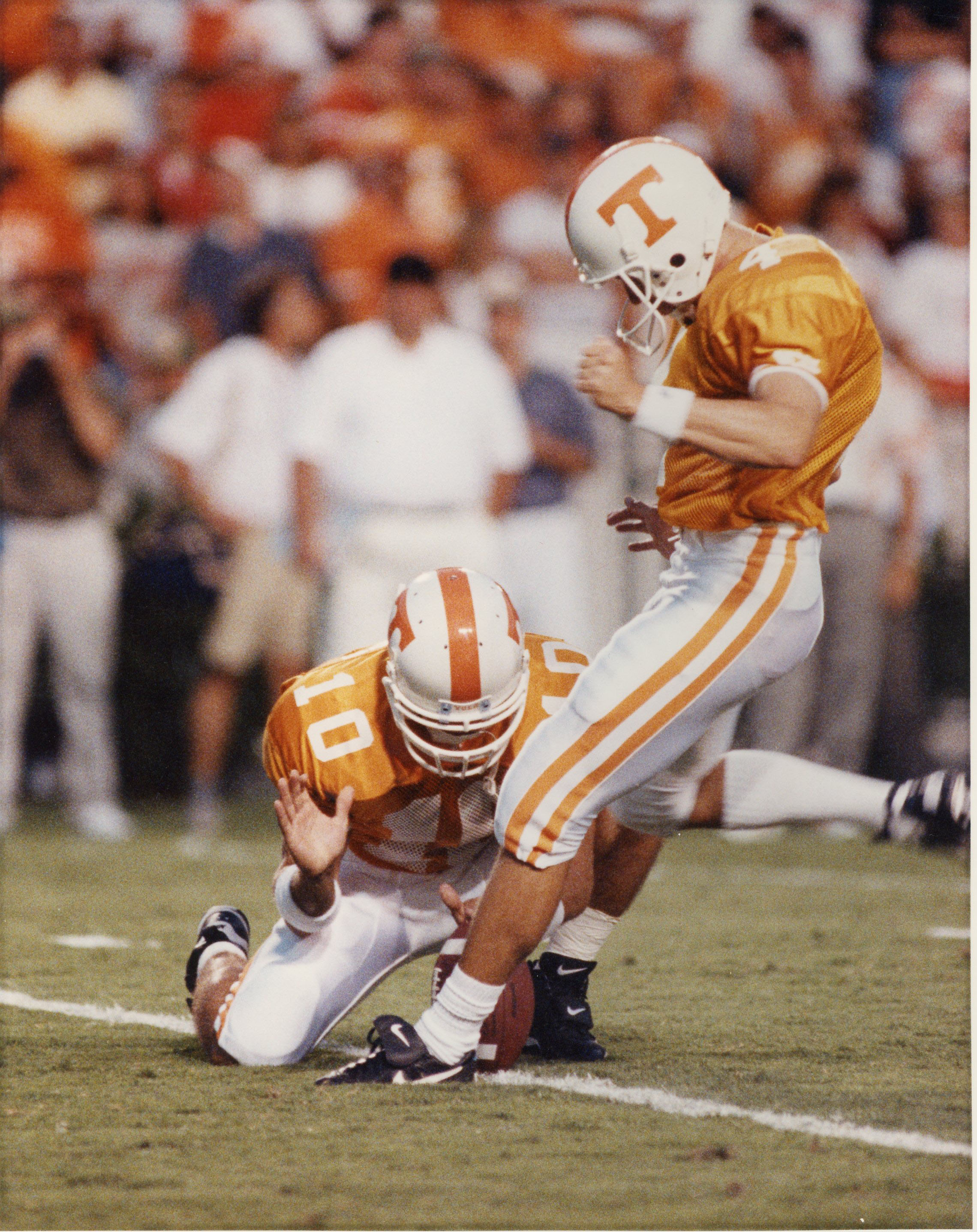
With a second life, the Vols drove to the 10-yard line. Kicker Jeff Hall kicked a 27-yard field goal as time expired to steal a victory, 34-33. One down. Twelve to go.
The Vols hosted No. 2 Florida after a bye week. It seemed likely the Gators would win. Florida, rather famously and boisterously, had beaten UT five consecutive times, the latter four largely against Manning.
“There for a while, it seemed like even when had the better team for a few years, Florida still had our number,” Sanders said.
Not this time. The Vols’ defense made sure of that.
“Going into that game, we already knew it wasn’t going to be a super high scoring game,” Wilson said. “They didn’t have a super explosive offense … but we knew that Florida had a helluva defense. We knew that defensively it was going to come down to us on our side of the ball to win that football game.
“After losing to them for three straight years (in my career), we were just determined not to lose. It was that simple. It was one of those mindsets that we’re not going to lose four in a row.”
Wilson was right. Steve Spurrier’s Gators outgained the Vols 396-235 yards, but the Gators had five turnovers. Wilson forced three fumbles, which is a school record. Fullback Shawn Bryson scored on a 57-yard touchdown run in the first quarter. The Vols also scored on a 29-yard touchdown pass from Martin to receiver Peerless Price.
The game was hard fought before Hall nailed a 41-yard field goal to help beat the Gators 20-17 after Florida kicker Collins Cooper’s field goal attempt sailed wide left in overtime.
The Vols were 2-0. They had survived cramps in the Carrier Dome, a pass that initially looked incomplete and the dreaded Gators. The Vols had every goal left to play for and it looked like it the next time they took the field.
The Vols hammered Houston 42-7 the following week before returning to SEC play. Auburn was next — a rematch of the SEC Championship Game.
Still struggling to find more offensive production, UT’s defense ruled the day on The Plains. Defensive lineman Sean Ellis was named the SEC Defensive Player of the Week thanks, in part, to a 90-yard interception return for a touchdown. Jamal Lewis ran for a 67 yards and a touchdown on his first carry. The Vols also turned in a key goal line stand with Wilson, who was injured, cheering on his teammates from the sideline.
“Being a leader, I had to stay in tune to the football game, so when the defense is on the field, I was looking at the opposing offense, looking at formations, looking at motions and trying to figure this is what they’re trying to do to us,” Wilson said. “So when the guys came back to the sideline, it’s like having another coach on the field with you.”
The Vols beat Auburn 17-9, but it was far from a perfect day. Lewis suffered a season-ending knee injury. Lewis had been the focal point of a UT offense that was still trying to find its identity. His loss wouldn’t be easy to overcome. A date at No. 7 Georgia was seven days away.
The Vols responded incredibly well without Lewis. Travis Stephens rushed for 107 yards and Travis Henry ran for 53 yards as UT beat Georgia 22-3 in Athens.
“We were a huge underdog,” Fulmer said. “At that time we were still undefeated and an underdog. That shocked us. They were a good team but certainly a team we had beaten at home the year before pretty good. I think our guys got pretty pumped up to play. It was a pivotal game for us. … We beat them a lot worse than the score was. I do know that.”
The Georgia win infused the Vols with confidence. They could win without Lewis and the passing game was more than just screens and an occasional deep pass. Beating the Bulldogs as soundly as they did was also personal for several Vols as many key UT players hailed from Georgia, such as White, offensive lineman Cosey Coleman and safety Deon Grant. Beating Georgia handily was a midseason bonus for the players from the Peach Tree State.
The remainder of the schedule seemed beatable. There were plenty of big-name programs but was was playing at a high level — at the Vols’ level — except a surprisingly formidable foe that was lurking later in the season.
As odd as it might seem now, the Vols cruised past Alabama, as they were used to. UT beat the Tide 35-18 to notch its fourth consecutive win over its rival.
The offense had found its stride.
“I had frustrating moments during that year where I knew I could do more, but I wasn’t getting the opportunity to do more.”
— Tee Martin, quarterback
The Vols then crushed South Carolina 49-14 and UAB 37-13. They were 8-0 — already exceeding Fulmer’s preseason skepticism. They climbed to No. 1 in the AP Poll — the first time since 1956. The road seemed paved to the SEC Championship Game.
Tennessee showed a maturity in that run of games since Georgia that no one would have expected with a team that lost so many leaders from the previous year. The Vols were better than the teams they played and showed it. UT didn’t need a key pass interference call, a rash of opposing turnovers or a goal line stand to beat Bama, South Carolina and UAB. They just needed to play like they had practiced in the long offseason leading up to the 1998 season. However, there was one major hurdle to overcome and it would determine the Vols’ fate.
Stoerner’s fumble the ‘Miracle’ that saves Vols
As surprising as UT’s 1998 season was, Arkansas’ was nearly as stunning. Like the Vols, the Razorbacks were undefeated and hoping for a shot at an SEC and national title. The two teams were set for an epic matchup at Neyland Stadium. The game certainly lived up its billing.
Tennessee trailed Arkansas 24-10 in the third quarter. The Razorbacks, ranked No. 10, seemed as though they were putting the game away in the fourth quarter. They led 24-22 and were driving. One first down would end the game. That’s when an unlikely event happened and hero appeared.
“A miracle,” Coleman told reporters after the game.
Defensive tackle Billy Ratliff decided he’d take things into his own hands. He famously told Martin to keep his helmet handy because UT’s defense would get the ball back. Ratliff, who admittedly had been beaten throughout the game by Arkansas All-American offensive guard Brandon Burlsworth, decided to jump the snap, risk jumping offsides and just try to make a play.
“I stuck my arm straight in his chest and was going to try to drive him into the goalpost,” Ratliff said.
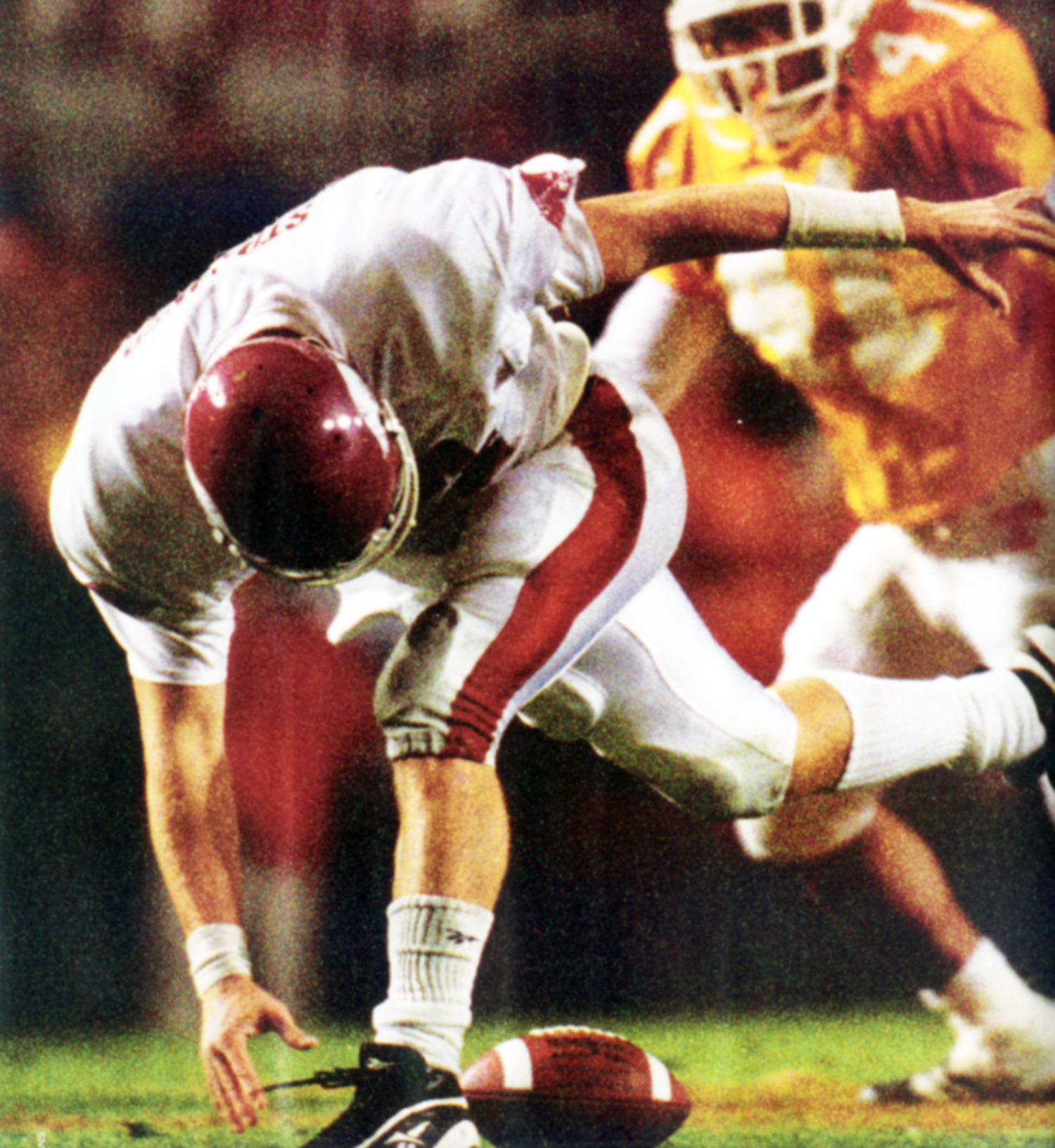
Arkansas quarterback Clint Stoerner was pressured when Ratliff drove Burlsworth into Stoerner, causing him to stumble. Stoerner seemingly placed the ball on the ground as he tried to balance himself. Ratliff jumped on the loose ball, giving Tennessee an unexpected opportunity.
After taking over at the Hogs’ 43-yard line with just 1:43 left, the Vols wouldn’t be denied. Henry ran the ball five consecutive times. The final run resulted in a 1-yard touchdown run with 28 seconds left and an eventual 28-24 win.
According to many players and coaches on the 1998 team, that sequence events made them believe they were destined to be national champions. The Vols had tasted what it was like to lose even in a win. They didn’t like that taste.
The Vols blew by Kentucky 59-21 then hammered Vanderbilt 41-0. Next up was a shot at winning UT’s second consecutive SEC title. All the Vols had to do was beat No. 23 Mississippi State. That proved more difficult than many expected.
The final steps to perfection … and an unexpected curveball
The Vols trailed Mississippi State 14-10 before Martin threw two touchdown passes in 32 seconds in the fourth quarter. The first was a 41-yard strike to Price. The second was a 26-yard pass to Wilson after a State fumble. It was a sign of how far UT’s offense had come.
The Vols could still run the ball, but Martin, who is now the offensive coordinator at Southern California, was now considered a threat in the passing game. He never doubted he could do it. Cutcliffe, however, thought it best to keep the reins tight on the passing game, especially early in the season.
“I wasn’t concerned as a player, but now that I’m a coach I understand,” Martin said. “Then you’re a player, you don’t always think the coaches know how good you are. They have to think of the repercussions of calling plays whereas when you’re a player, you know you can do these things. For me, I had to talk to people. I had frustrating moments during that year where I knew I could do more, but I wasn’t getting the opportunity to do more.”
Now the Vols could do more on offense and the biggest stage was yet to come. The Vols entered the SEC title ranked No. 1 in the major polls and — most important — in the all-new BCS ranking. Thanks to losses by the nation’s other two undefeated teams, UCLA and Kansas State, the Vols were assured a chance to win a national title. They would face Florida State in the Fiesta Bowl in Tempe, Ariz.
However, they had another challenge to endure before heading West.
“I cried in front of that team. I cried at home, literally cried. I grieved.”
— David Cutcliffe, on leaving before the title game
Cutcliffe had interviewed with Ole Miss and was expected to leave to become the Rebels’ head coach. Once he was officially offered the job, the question was when would Cutcliffe leave. Ole Miss asked him to coach in the Independence Bowl against Texas Tech. Cutcliffe knew he couldn’t be in both places at once, so he decided to leave UT and take on the Ole Miss challenge. Cutcliffe, who is now the head coach at Duke, had coached at UT since 1982. The emotions were strong.
“I cried in front of that team,” Cutcliffe said recalling telling his players. “I cried at home, literally cried. I grieved.”
Cutcliffe said there were two reasons he agreed to leave immediately for Ole Miss. First, he felt confident in Sanders as UT’s offensive coordinator. Second, Cutcliffe felt confident in his team.
“There was no way on God’s green Earth they weren’t going to win that game,” Cutcliffe said. “I never had a concern.”
Most of the sports world didn’t agree with Cutcliffe. Most predicted a Florida State victory despite the fact that the Seminoles had to play their third-string quarterback, Marcus Outzen, due to injuries to starter Chris Weinke and backup Jared Jones.
Florida State’s best offensive threat was receiver Peter Warrick, who also starred as a punt returner. Goodrich knew what he had to do. He made it clear to defensive backs coach Kevin Ramsey.
“I told coach Ramsey I wanted Peter Warrick wherever he went the whole game,” Goodrich said.
The strategy worked. Goodrich and the Vols contained Warrick. More important, Goodrich jumped one of Warrick’s routes and returned an Outzen interception 54 yards for a touchdown.
“I knew he couldn’t run by me,” Goodrich said. “He wasn’t faster than me, so I wasn’t worried about him blowing by me.”
That put the Vols in control. However, they’d need one more big play to secure UT’s first national title in 47 years.
A go route into history
“I’ll never forget that play call,” said Sanders, who is now the head coach at East Tennessee State. “It was ’69 Go.’ Florida State had a huge tendency. They either played Cover 2 or they played man-to-man on those situations. It was a route that was good versus either of those coverages. We felt good about Peerless. Peerless had a great game for us. He kind of got hot. Tee had a lot of confidence in it. One of the things Tee did very well was throw the deep ball.”
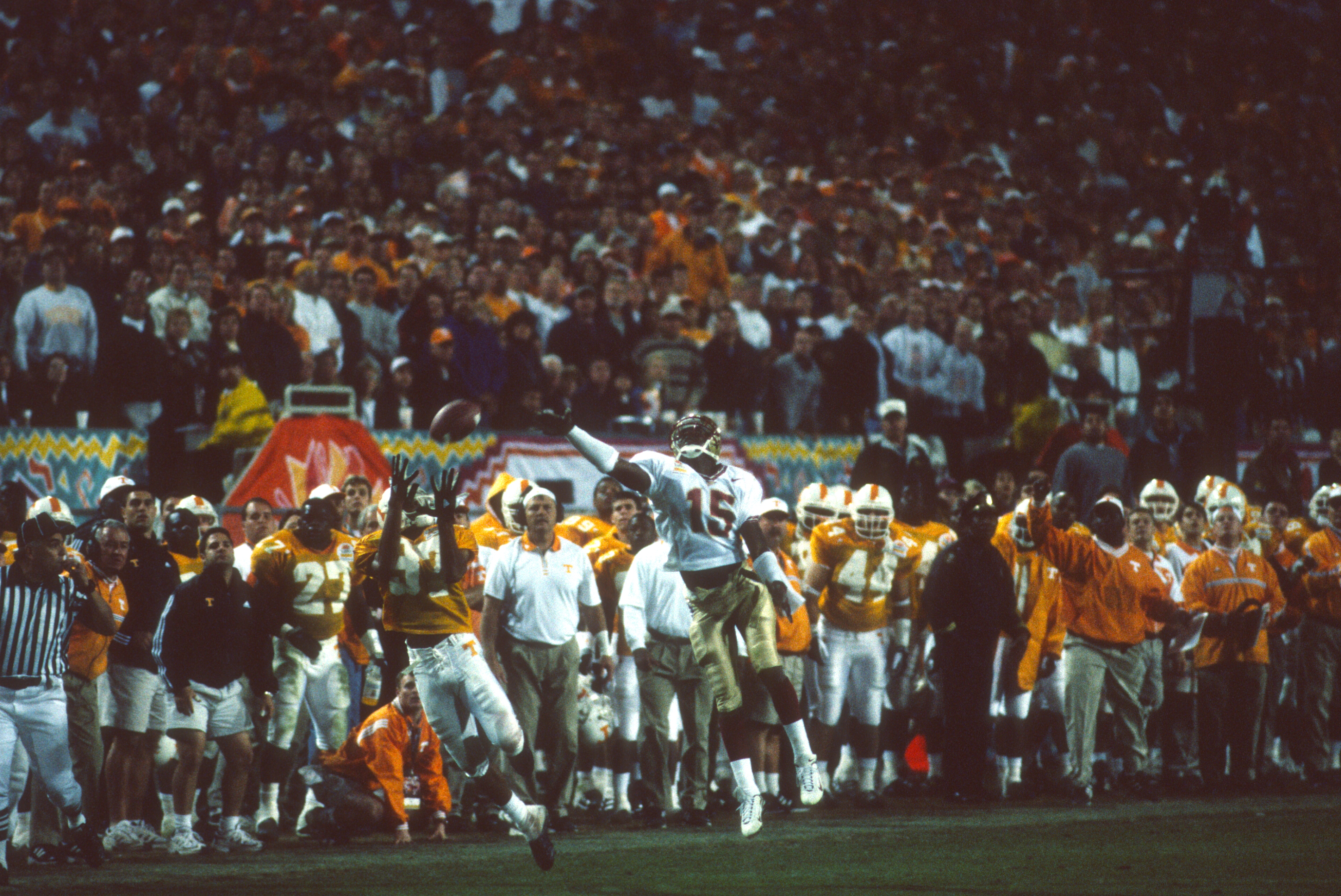
Price hauled in a 79-yard touchdown pass that gave the Vols a 20-9 lead midway through the fourth quarter. That was all UT’s defense would need. Florida State tacked on a late touchdown, but the perfect Vols stayed perfect, 23-16.
“The SEC titles were good; the national championship was a feeling that I never could have imagined,” Wilson said. “That national title puts you as the creme de la creme. You are the number uno in college football. … That’s a feeling that’s indescribable.”
And it was all born out of the hard work that began a year earlier and the chemistry that resulted in a dedication to being a team.
“Nobody expected that ’98 team to be that special,” Wilson said. “That’s why I believe we were so much closer as a team simply because nobody gave us a chance. That just motivated guys to go out and want to play hard and compete for each other and show the world that we’re a lot better than you think we are. That’s what stood out to me, how close we were as a team, the way we hung together off the field, the way we held each other accountable when guys weren’t doing their job.
“The way we policed ourselves other as a team. Coaches didn’t have to worry about us off the field. We did it ourselves. If a guy is out (expletive) up, you pull him to the side and let him know we need everybody doing their role and doing their part.”
That wasn’t a problem for the Vols in 1998. That attitude proved to be championship worthy.
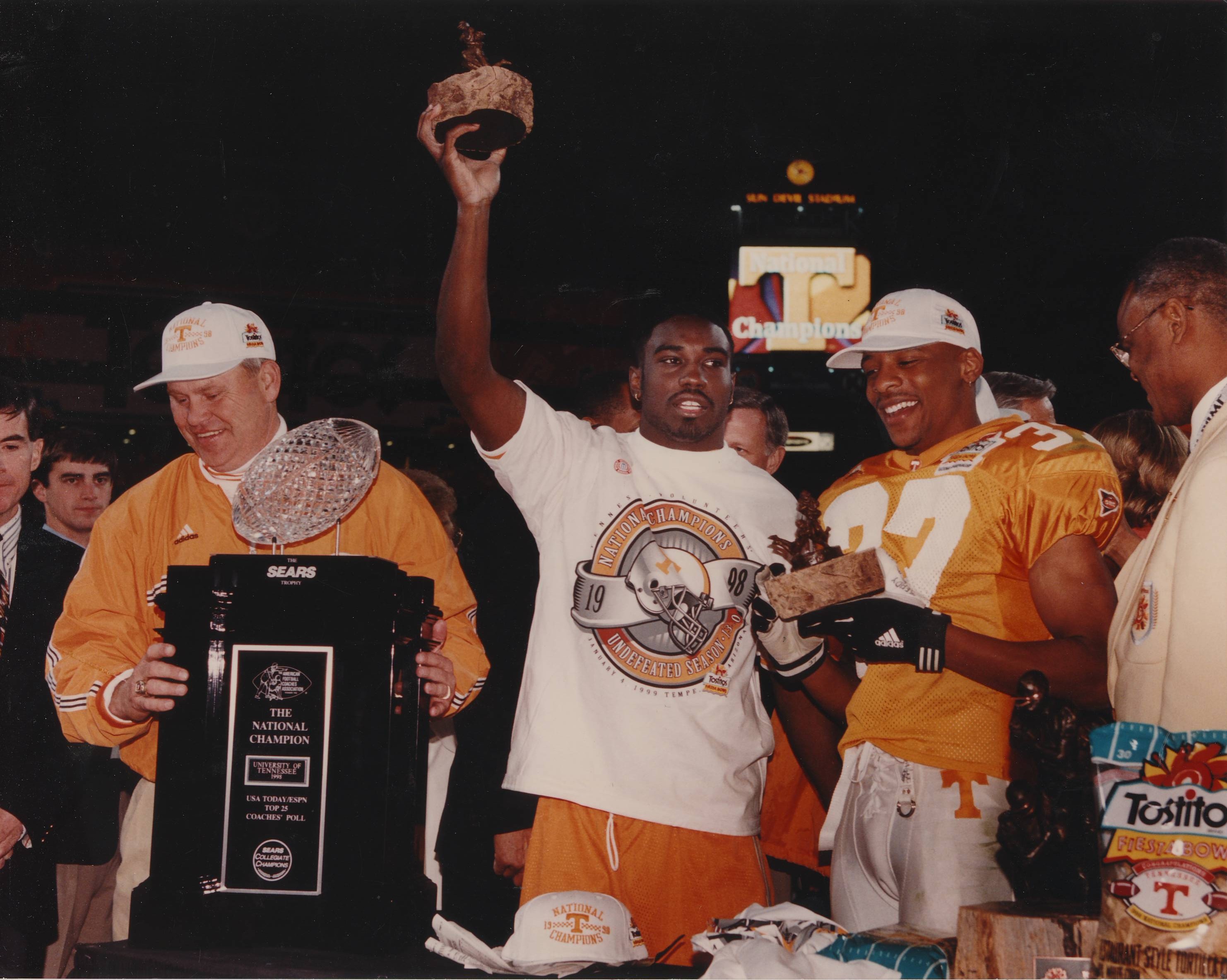
NEXT: Al Wilson: The Vols’ heart, soul and enforcer
Cover photos courtesy of University of Tennessee Athletics. Design by Chris Stoney.
Dave Hooker started covering Tennessee in 1998. He hosts an SEC radio show out of Chattanooga and covers the SEC for Saturday Down South.