DFS Card Rips Explained: How Rip Cards Online and What to Expect

Last Updated:
Card rips are a new way for sports fans and collectors to purchase trading cards online, with DFS apps now offering digital packs that reveal real physical sports cards. Instead of buying a pack at a store, users can open one through an app and decide whether to keep, ship, or sell back the card they receive. This guide explains how DFS card rips work, which apps offer them, how to understand pack odds, and what to know about buybacks before making a purchase.
What Are Card Rips?
Card rips are digital trading card packs that users purchase through an online platform or mobile app. Instead of receiving a physical pack in the mail and opening it themselves, customers buy a digital pack, reveal their card online, and receive a physical collectible.
DFS platforms have begun introducing card-ripping products featuring sports cards, Pokémon cards, and other collectibles. Each pack typically contains one physical card stored in a secure vault. Once the user opens the pack, the app reveals which card they received and displays its estimated Fair Market Value (FMV).
Why DFS Apps Added Card Packs
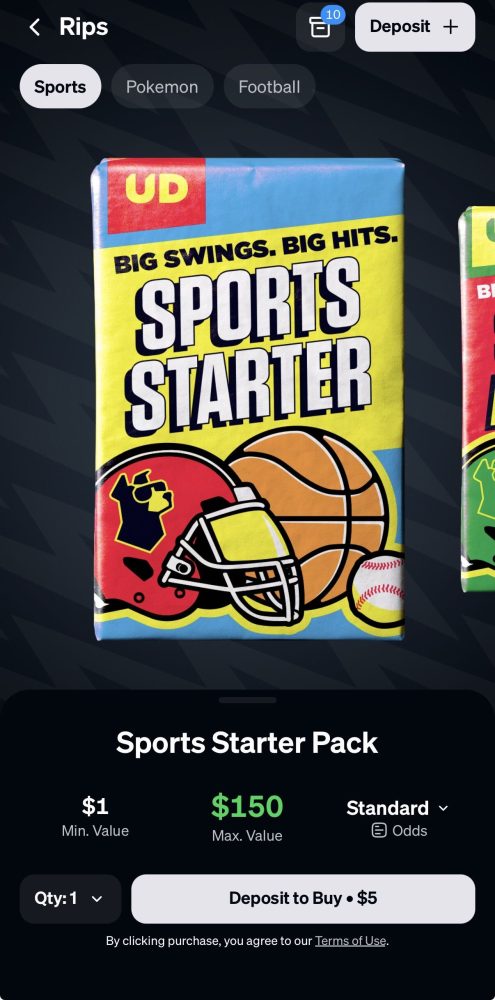
DFS platforms already have established audiences of sports fans who enjoy following athletes, collecting sports memorabilia, and participating in fantasy contests. Adding digital card packs gives these companies another product to offer existing customers. Card ripping also fits naturally into the mobile app experience. Users can access their accounts, fund their wallets, and buy packs without visiting another website or retailer.
For sports fans, the appeal is the combination of collecting and the excitement of opening a mystery pack. Instead of buying a specific card, users can reveal something unexpected, including rare rookie cards, autographs, and professionally graded collectibles. It also gives DFS platforms another way to engage customers outside traditional fantasy sports contests. However, card ripping is a separate product, with its own purchase rules, odds, and eligibility requirements.
How Card Rips Work on DFS Apps
Although each platform has different pack prices, features, and policies, the general card-ripping process is similar across Underdog, PrizePicks, and Chalkboard. Users select a pack, review the available cards and odds, purchase and open the pack, and decide what to do with the physical card they reveal.
Step 1: Pick a Pack Tier
The first step is choosing a pack. Most DFS card-ripping platforms offer multiple price points, letting users choose an option that fits their budget. Pack prices can range from a few dollars to hundreds or even thousands. Higher-priced packs may feature different card inventories, value ranges, and probabilities than lower-priced options.
Some platforms also separate packs by collectible category. For example, users may find basketball, football, or Pokémon packs rather than one general selection. Before buying, check the pack’s price and the types of cards available. Spending more doesn’t guarantee you will get a card worth more than the purchase price.
Step 2: Check the Odds and Value Range
After you select a pack, review the odds and estimated card values before you buy. Most platforms organize possible pulls into different tiers based on their estimated value. Each tier has a corresponding probability, showing how likely you are to receive a card within that particular range.
For example, a pack might offer a high probability of pulling a lower-value card and a much smaller chance of receiving a rare or expensive collectible. Pay attention to the following information:
- Minimum and maximum card values.
- Probability of pulling each value tier.
- Featured cards or special collectibles.
- Whether the displayed odds apply to an entire tier or an individual card.
Remember that Fair Market Value is an estimate. A card displayed at $100 FMV is not necessarily guaranteed to sell for $100 on an outside marketplace.
Step 3: Open the Pack
After selecting your pack and reviewing the odds, complete the purchase and open it through the app. The platform randomly assigns a card from the available inventory and reveals the result on your screen.
Each pack is tied to a real physical card that the platform or its fulfillment partner already has in stock. You do not need to wait for a physical package to arrive to find out what you pulled. Depending on the operator, the card could be a raw collectible, an authenticated card, or a professionally graded slab from a company such as PSA, BGS, CGC, or SGC.
Once the reveal is complete, the platform displays the card and its estimated value.
Step 4: Keep, Ship or Sell Back Your Card
After opening a pack, you can decide what to do with your card.
If you want to build a collection, you can generally keep the card in your account’s vault or collection area. When you’re ready, you can request physical shipping.
If you don’t want to keep the card, you can accept the platform’s buyback offer. This allows you to sell the card directly to the operator for its displayed FMV instead of finding an outside buyer.
Keep in mind that each operator has a different decision window. Some give users 24 hours to decide, while others provide three days. If you do not make a selection before the deadline, the platform may automatically buy back your card. Always check the terms before opening a pack so you know how long you have to decide.
DFS Apps That Offer Card Rips
Several DFS platforms have entered the digital trading card market, including Underdog, PrizePicks, and Chalkboard. While the general experience is similar, each operator has different pack options, available collectibles, and buyback policies.
Prices and product offerings are subject to change. Check each operator’s current storefront for available packs.
Underdog Rips
Underdog Rips is the digital card-ripping product available through the Underdog app. Users can purchase mystery packs containing real physical trading cards, reveal their collectibles, and decide whether to keep, ship, or sell them back. Underdog offers several pack price points, including $5, $10, $25, and higher-priced options. Each pack contains one physical card, either an authenticated collectible or a professionally graded slab.
One feature that separates Underdog Rips from some competitors is its three-day decision window. Users can review their card after opening and decide whether to request shipping or accept the 100% FMV buyback offer. If no decision is made within three days, the card is automatically sold back at the original displayed value. Users can find pack odds directly on the product page before purchasing. These odds can change as other customers open packs and the available inventory changes.
 UNDERDOG FANTASY
PLAY $10, GET $50 OVER 10 DAYS W/ CODE SDS!
- UNDERDOG PREDICT
50% DEPOSIT MATCH UP TO $1,000 & KEEP YOUR MILLION W/ CODE SDS!
- UNDERDOG RIPS
PLAY 5, GET 5 FREE RIPS PACKS WORTH UP TO $750 W/ CODE SDS!

PrizePicks Packs
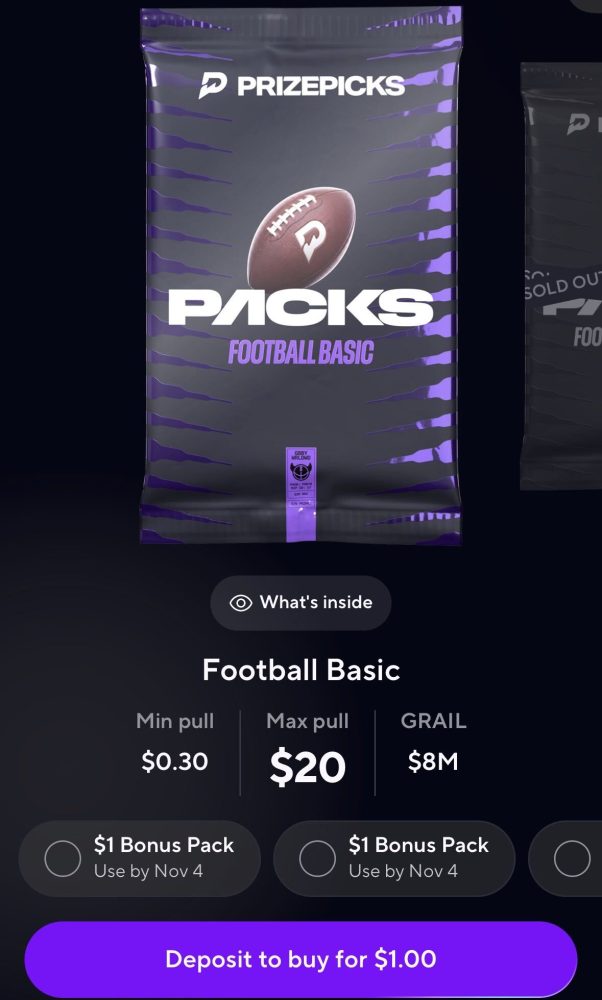
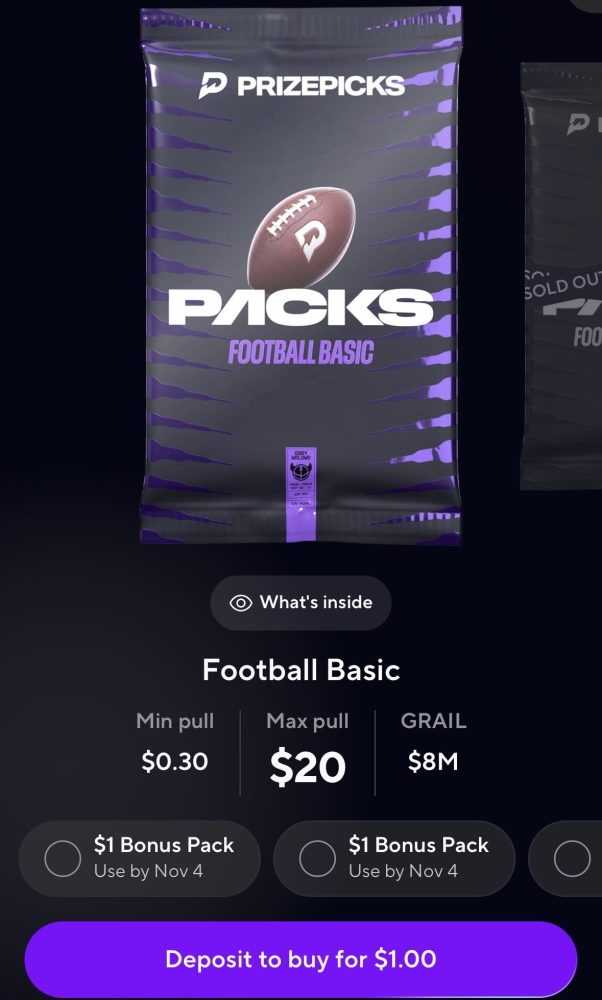
PrizePicks Packs gives users another way to collect real physical trading cards through the PrizePicks app. Users can choose from basketball, football, and Pokémon packs, with prices starting at $1.Each pack contains one real trading card stored at a secure facility. Before purchasing, users can review the possible card values, available collectibles, and odds of pulling different value tiers.
PrizePicks organizes its standard pulls into six tiers: Starter, Clutch, Elite, MVP, Legendary, and GOAT. It also features Grail cards, which sit above the standard tiers and represent some of the most valuable collectibles available in its inventory. After opening a pack, users can sell their card back for 100% of its displayed FMV or save it to their Locker and request shipping. PrizePicks provides a 24-hour decision window before automatically accepting the buyback offer if you take no action.
Chalkboard Pulls
Chalkboard Pulls is the platform’s digital sports card experience, letting users purchase packs and reveal real physical trading cards. Users can browse the available packs, review their possible card values and odds, and open a pack through the Chalkboard platform. Cards may be professionally graded and encapsulated or offered as raw, ungraded collectibles.
After revealing a card, users can hold it in their Binder, request physical shipping, or sell it back for 100% of its displayed FMV. Chalkboard gives users a 24-hour decision window starting when they purchase a pack. If they do not choose to ship or sell the card before the deadline, Chalkboard automatically processes a buyback at 100% of the card’s FMV.
Chalkboard also periodically offers promotional Free Packs to eligible users. These rewards appear in the Promos section of Pulls and can be opened without purchasing another pack. However, proceeds from selling a card received through a Free Pack are credited as play-through funds rather than immediately withdrawable funds.

Where Are Card Rips Available?
Card-ripping availability varies by operator and state. Just because a DFS app offers traditional fantasy contests in your state does not automatically mean its card packs are available there.
Users must generally be physically located in an eligible jurisdiction and complete any required identity and location verification.
Underdog Rips Availability
Underdog Rips is available in all 50 states except Nevada, according to Underdog’s current help documentation.
The product is not available to customers located in Canada. Users must also meet the applicable age requirements and complete any required verification. Availability and age restrictions can change, so check the Underdog app before buying a pack.
PrizePicks Packs Availability
PrizePicks Packs is available in all 50 states and Washington, D.C., according to the operator’s published eligibility information.
This is separate from the availability of PrizePicks’ traditional Player Picks and other fantasy products, which have different state restrictions.
Users must have a verified account and be physically located in an eligible jurisdiction to purchase packs. Minimum age requirements and other eligibility rules may vary by location.
Chalkboard Pulls Availability
Chalkboard has a more specific availability structure for its Pulls product. The operator separates jurisdictions where both Pulls and DFS are available from states where customers can access Pulls only.
How to Read Card Pack Odds
Understanding card pack odds is one of the most important parts of purchasing digital collectibles. Every pack has a set of possible outcomes, and the odds show how likely you are to receive a card from each available tier.
Most operators organize their cards by estimated value. Lower tiers generally contain more affordable cards, while higher tiers feature more valuable or rare collectibles.
For example, a pack could have the following hypothetical odds:
These numbers are illustrative and are not the published odds of a specific operator’s pack.
There are two common ways platforms display probabilities:
- Percentage odds: A 5% chance means that an outcome has a 5-in-100 probability.
- 1 in X odds: A 1-in-20 chance is equivalent to a 5% probability.
Both formats communicate the same basic information. The important thing is understanding whether the probability refers to a specific card or an entire value tier.
For example, a 10% chance of pulling from a particular tier does not mean that every card in that tier has a 10% chance of being selected. The tier could contain several different cards, each with its own probability.
Another important detail is that odds can change as packs are purchased. If a pack contains a limited inventory of cards and customers pull some of the available collectibles, the remaining card pool changes. This can affect the probability of receiving certain outcomes in subsequent purchases.
That is why you should always review the odds immediately before purchasing a pack rather than relying on an older screenshot or previously published probability.
Expected Value: What a Pack Costs You on Average
Expected value (EV) estimates the average value of a pack’s possible outcomes by accounting for the probability of pulling each card or value tier.
The basic formula is:
Expected Value = (Probability of Outcome 1 x Value of Outcome 1) + (Probability of Outcome 2 x Value of Outcome 2) + …
To calculate EV, multiply each outcome’s probability by its estimated value, then add the results.
Let’s use a hypothetical $5 pack to demonstrate how this works:
In this example, the pack has an estimated expected value of $6.70.
If the pack costs $5, its theoretical expected value is $1.70 higher than the purchase price.
However, that does not mean you are guaranteed to receive a card worth $6.70. Most individual openings will produce one of the outcomes listed above, and the actual card could be worth considerably less than the pack price.
There are also a few important limitations to remember when calculating EV:
- Card values are estimates, not guaranteed resale prices.
- The value of a card on an outside marketplace may differ from its displayed FMV.
- Shipping fees and other costs can reduce the value of keeping a physical card.
- Expected value averages many hypothetical openings, not a prediction of what you will receive from one pack.
For the most accurate calculation, use the odds and card-value ranges displayed on the operator’s live pack page. When a tier contains multiple cards, use a reasonable average value for that tier rather than automatically assuming every card is worth the maximum displayed amount.
Important: The example above is for explaining the EV calculation and does not represent a verified Underdog, PrizePicks, or Chalkboard pack. Published probabilities are dynamic and should be captured from the specific pack immediately before publication.
How Buybacks and Sell-Backs Work
Buybacks are one of the biggest differences between digital card ripping and traditional trading card collecting.
Instead of finding a buyer on an outside marketplace, users can sell their revealed card directly back to the platform. The operator displays a Fair Market Value for the card, and users can accept the buyback offer if they do not want to keep the collectible.
The general process is straightforward:
- Purchase and open a digital card pack.
- Review the card and its displayed Fair Market Value.
- Select the sell-back or buyback option.
- Accept the offer and receive the eligible credit in your account.
- The platform takes the card back into its inventory.
Most of the major DFS card-ripping platforms advertise buybacks at 100% of the card’s displayed FMV. However, this doesn’t mean users automatically get their original pack purchase price back.
For example, if you spend $25 on a pack and pull a card with a $10 FMV, accepting a 100% buyback would return $10 in eligible credit. You would still be down $15 compared with your original purchase.
Fair Market Value is generally an estimate based on market information, comparable sales, or third-party pricing services. It may not match the amount a collector could receive by selling the card independently.
Platforms also differ in how long users have to accept a buyback or request shipping. Some platforms automatically sell cards back if the user doesn’t decide before the deadline.
Before purchasing a pack, review the operator’s buyback percentage, decision window, withdrawal rules, and shipping policies.
Are Card Rips Gambling?
Whether card ripping counts as gambling depends on the perspective you take.
On one side, card ripping shares several characteristics with traditional gambling. Users pay money for an uncertain outcome, and the value of the card they receive is determined randomly. Someone could spend $25 on a pack and receive a card worth considerably less, while another user could pull a rare collectible worth thousands of dollars. The possibility of receiving a high-value card is part of the appeal, but it also introduces financial risk.
On the other hand, card-ripping platforms distinguish themselves from traditional sports betting and fantasy contests because customers buy real physical collectibles. Each pack corresponds to an actual trading card, and users generally can keep it or request delivery. Some platforms also offer buyback programs, allowing customers to sell their cards directly back to the operator at a displayed FMV.
The legal classification of card ripping depends on the product’s structure and the laws governing the jurisdiction where a customer is located. A platform offering traditional DFS contests does not automatically determine how its card-ripping product is classified. Before purchasing packs, review the operator’s terms and check your state’s applicable rules. Do not assume that card rips are treated the same way in every state.
Is Ripping Packs on DFS Apps Safe?
Using an established DFS platform can offer a more familiar purchasing experience than buying mystery packs from an unknown seller. However, users should still understand how each platform handles account verification, card storage, shipping, and payments.
Account Verification and Security
Major platforms typically require customers to complete identity and location verification before accessing certain products or requesting withdrawals and physical shipping.
Common requirements include:
- Meeting the operator’s minimum age requirement.
- Providing accurate personal and payment information.
- Completing identity verification when requested.
- Allowing location checks to confirm eligibility.
- Maintaining only one account per person.
Users should also protect their login information and only purchase packs through the official app or website.
Shipping, Vaulting and Lost Card Policies
One benefit of digital card ripping is that users do not need to receive a physical pack before discovering their collectible.
The card is generally stored in a secure facility or vault until the customer requests delivery. This allows the platform to reveal the card immediately while handling physical storage separately.
If you decide to ship a card, review the following:
- Shipping and handling fees.
- Estimated delivery timelines.
- Whether tracking information is provided.
- Any applicable taxes.
- Policies for lost, damaged, or unavailable cards.
- Whether identity verification is required before delivery.
Shipping costs can vary by platform, vault partner, and destination. Some operators also have specific rules about how many cards they can ship in one order.
Remember that secure storage does not eliminate every risk. Review the operator’s terms so you understand what happens if a card is lost, damaged, or unavailable when you request delivery.
Tips Before You Rip Your First Pack
If you’re thinking about trying digital card ripping for the first time, a few things are worth understanding before spending money.
Start with a cheaper pack. You don’t need to spend hundreds of dollars to see how the experience works. Lower-priced packs let you understand the process without a big purchase.
Check the odds before buying. Don’t focus exclusively on the biggest card advertised. Look at the probability of pulling each tier and consider how many possible outcomes are worth less than the pack price.
Understand the difference between FMV and resale value. A card displaying a $50 FMV isn’t automatically worth $50 to every collector. Compare the card with recent sales of the same card, including its grade and condition.
Know your buyback deadline. Some platforms give you 24 hours to decide, while others give you three days. Missing the deadline could result in an automatic buyback.
Factor in shipping costs. If you want to collect physical cards, make sure you understand shipping costs before requesting delivery. A card might look appealing in your digital collection, but additional fees can affect its overall value.
Don’t chase a disappointing pull. Opening a lower-value card does not mean the next pack is more likely to contain something expensive. Each purchase has its own odds, and spending more does not guarantee a better result.
Compare the available platforms. Underdog, PrizePicks, and Chalkboard all offer different pack options and policies. Look at the starting prices, available sports, odds, buyback windows, and state restrictions before deciding where to rip.
Set a budget. Treat card ripping as entertainment and collectible spending, not a reliable way to make money. Only spend what you’re comfortable losing, and don’t buy another pack just because your previous one didn’t produce the card you wanted.
FAQs About DFS Card Rips
Card rips are digital trading card packs that users purchase and open through an online platform or mobile app. Each pack is tied to a real physical collectible that is revealed digitally. After opening a pack, users can generally keep the card, request shipping, or sell it back to the platform for its displayed Fair Market Value.
Underdog Rips allows users to purchase digital packs containing real physical sports cards and Pokémon cards. Users select a pack, review the odds, and open it through the Underdog app. After revealing their card, they can keep it, request shipping, or sell it back for 100% of its displayed FMV. Underdog provides a three-day decision window before automatically processing a buyback if no action is taken.
Chalkboard Pulls lets users purchase digital card packs and reveal real physical sports cards through the Chalkboard platform. After opening a pack, users can keep the card in their Binder, request physical shipping, or sell it back for 100% of its displayed FMV. Chalkboard provides a 24-hour decision window before automatically processing a buyback if the user does not make a selection.
Card-ripping availability depends on the operator and your physical location. Underdog Rips, PrizePicks Packs, and Chalkboard Pulls have different eligibility lists. Check the platform’s current state availability information and applicable local rules before purchasing a pack.
Card rips share some characteristics with gambling because customers pay for a randomized outcome that could be worth more or less than the purchase price. However, platforms distinguish these products by emphasizing that customers receive real physical collectibles. The legal classification can depend on the product’s structure and applicable state laws, so there is no universal answer for every platform or jurisdiction.
Yes. Both Underdog Rips and Chalkboard Pulls offer buyback options at 100% of the card’s displayed Fair Market Value. Underdog gives you a three-day decision window, while Chalkboard gives you 24 hours. If you do not make a selection before the applicable deadline, the platform automatically processes a buyback.
Chalkboard occasionally distributes Free Packs through promotions and rewards. Eligible users can find these offers in the Promos section under Pulls. Select the available Free Pack to open it without making another purchase. If you sell a card received through a Free Pack, the proceeds are credited as play-through funds rather than immediately withdrawable funds. Free Pack availability and expiration dates depend on the promotion.
Yes. Underdog Rips, PrizePicks Packs, and Chalkboard Pulls are designed around real physical trading cards. The digital opening reveals the card assigned to your pack, and the physical collectible is generally stored in a secure facility until you request shipping or accept a buyback.
Leading DFS platforms that offer digital card ripping include Underdog, PrizePicks, and Chalkboard. The best option depends on what you want. Before choosing a platform, compare starting pack prices, available sports and collectibles, odds transparency, buyback policies, and state availability.
Several platforms offer experiences similar to Underdog Rips, including PrizePicks Packs and Chalkboard Pulls. Each lets users buy digital packs, reveal real physical collectibles, and choose to keep, ship, or sell back their cards. Other digital card marketplaces and repack platforms may offer similar experiences, although their pricing, odds, and policies can differ.
Danny Destler is a daily fantasy sports (DFS) and sports betting expert with deep knowledge across a wide range of sports. A graduate of Marist University, he specializes in creating sharp, engaging, and evergreen content that resonates with both seasoned DFS players and casual fans alike.