Who gets to vote in the Associated Press Poll? How and who chooses them?

Published:
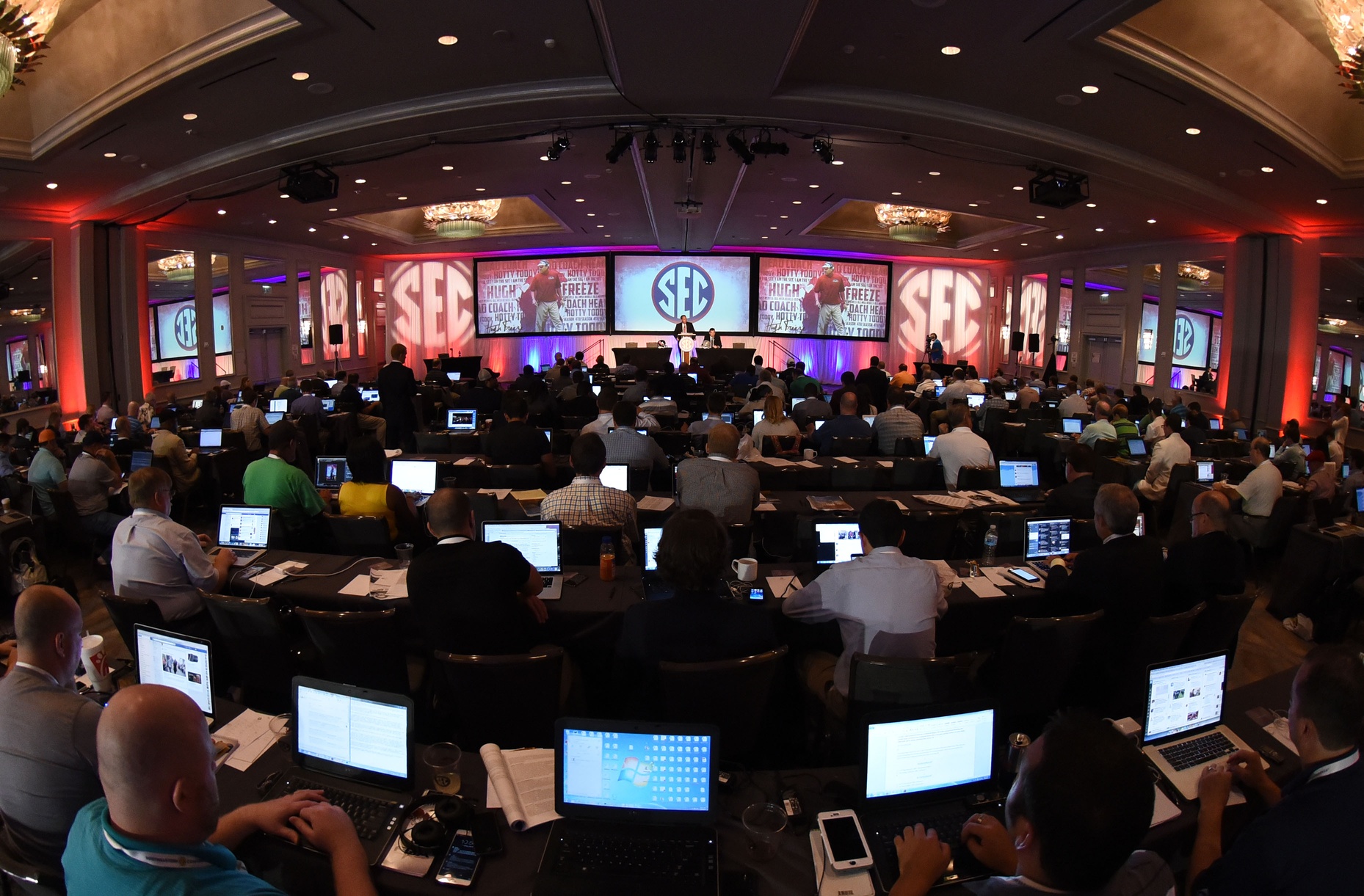
Now that the Associated Press has released its poll of the Top 100 college football programs since the poll’s inception in 1936, it leads to the natural inquiry of who is voting in the AP poll.
Sure, it’s sportswriters. But who? And how are they selected?
“It’s got to be someone who spends time covering Division I football,” explained Teresa Walker, the Associated Press sports editor for Tennessee. “We do it on a geographic basis. Each state gets a number of voters based on the number of teams in the state.”
For example, in Walker’s state there are four FBS teams: Memphis, Middle Tennessee State, Tennessee and Vanderbilt. Roughly breaking down into a one-voter-for-every-two-FBS-teams-in-a-state rule, two Associated Press members from Tennessee will vote in the poll, but only one from Missouri will. Three national, at-large voters are also selected to vote in the poll.
Broadcasters as well as writers are eligible to be chosen, just as long as they are AP members. Voters are chosen by the state’s sports editor or lead writer, the latter title generally given to the longest-tenured sportswriter in the state. They are approved by the AP’s supervisor in the region (Oscar Dixon in the southeast) and main office in New York.
“Every state is a bit different,” Walker said. “I make a serious effort now to rotate the voters every year. You want to make sure everyone can take part. And people want to take part.”
So while John Adams, the long-time sports columnist of the Knoxville News-Sentinel, chose the Top 25 last year, this season Patrick Brown of the Chattanooga Times Free Press will have the honor this season.
Though currently the 2015 voters are displayed, the voters are listed on the AP’s college football website and their selections are made public.
Which, naturally, means criticism from fans who don’t agree with their selection. Some voters face enough grief that they don’t want to return the following season, but otherwise to vote in a poll and have such an influence on the standings of college football is obviously a prestigious honor.
However, in Walker’s case, covering the Southeastern Conference is often a leading factor on being selected to vote in the poll.
“I want someone looking at good competition,” she said. Hence, a writer covering MTSU may be very talented but probably isn’t going to see many teams eligible for the AP Top 25 in the Sun Belt Conference.
But it also gives writers from smaller newspapers a chance to vote and gain a prestige they otherwise wouldn’t have. The Greeneville Sun may have a circulation of roughly 15,000, but historically they cover the Vols. Hence, in 2007, longtime Sun sports editor Wayne Phillips voted in the poll.
Walker indicates the voters are not given guidelines on how to rank teams. There are no unspoken tie-breakers, such as head-to-head competition, nor are voters asked to weight conferences or schedules on anything but their own judgment of strength.
“Leave it to what the writer believes,” Walker said.
And writers have opinions.
“A pet peeve of mine has always been some voters would put a team No. 1 in the preseason poll, and then, as if their ego was in the process, they wouldn’t remove that team until they lost,” Adams said. “I had a beginning point, but I felt you had to reshuffle the teams, constantly evaluate strength of schedule and the nature of the victories.
“Things change on a weekly basis. Just because a team was No. 1 last week doesn’t mean it should be No. 1 this week.”
Of course, there are charges of bias, geographic or otherwise. Ohio State, for instance, was ranked at the top of the “Top 100 programs” poll this week, and because the Buckeye State is home to four Mid-American Conference programs along with OSU and Cincinnati, there will be three voters from Ohio, whereas South Carolina only has one.
But sportswriters often champion their objectivity, leading Walker to say of the voters, “I have yet to run into a person who isn’t a true professional.”
Take the case of retired columnist Corky Simpson of the Tucson Citizen. In 1992, when most of college football was enamored with the University of Miami dynasty, Simpson consistently voted Alabama No. 1 all season long.
When the two teams met in the Sugar Bowl for the national championship, 61 of 62 poll voters had chosen the Hurricanes as the top team in the land in the previous AP poll.
The Crimson Tide won, 34-13, and the one writer who had touted Alabama’s talent all year long was one who covered the Pac-10.