
In college basketball, NCAA Championships are won in March Madness, but in the transfer portal era, championship rosters are largely built in April.
That’s the transfer portal window and the time when the bulk of player retention and portal addition that makes up modern roster building occurs. You might not win a title in April, but with the wrong roster build, you can almost certainly lose one.
While roster building isn’t entirely complete (looking at you, LSU), especially as players who have already entered the portal decide on future destinations, the closing of the transfer portal on April 21 and the NBA Draft’s early entrant deadline have both passed. This makes additional player departures and attrition unlikely, and means that late April and early May is an ideal perfect time to take inventory of where programs are from a roster standpoint heading towards the 2026-27 season.
While championship contenders can be built through the portal, as national champion Michigan just proved, the more clear-eyed path in the era of name, image, and likeness involves a combination of roster retention, smart portal additions and yes, effective high school recruiting. Indeed, even the Wolverines prove this point — while they started 4 first-year portal additions, the team’s elite depth was built by holdovers like Will Tschetter, LJ Cason, Nimari Burnett, and Roddy Gayle, and an elite freshman, Trey McKenney. The point? You better combine all facets to win big in the NIL era.
With that roster building blueprint in mind, here’s look at the SEC’s winners so far this offseason.
Editor’s Note: We will look at SEC offseason losers in part 2.
Winners
These are the teams that did the best work this offseason:
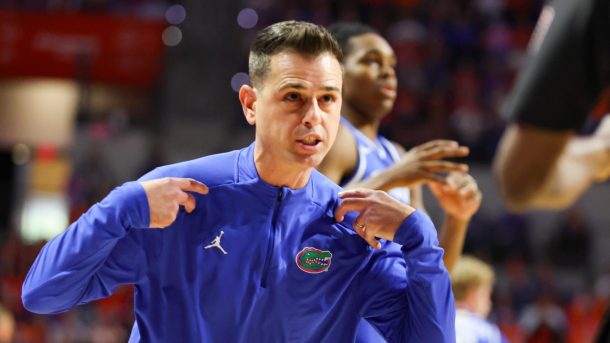
Florida Gators
Portal Additions: Denzel Aberdeen (Kentucky)*
Portal Losses: Micah Handlogten*, Olivier Rioux
Key Players Retained: Thomas Haugh, Alex Condon, Rueben Chinyelu**, Boogie Fland, Urban Klavžar, Isaiah Brown
*: requires waiver
**: Testing NBA Draft with option to return
The Skinny: The reigning SEC champion Florida Gators are poised to start the season ranked No. 1 in the country thanks to extraordinary player retention.
In a year where there were few obvious stars in the transfer portal, the Gators won the offseason in the SEC by holding 4 starters from last year’s 1 seed, assuming center Rueben Chinyelu, the reigning National Defensive Player of the Year, returns to school after testing the NBA Draft waters. Florida also held onto SEC Sixth Man of the Year Urban Klavžar, the team’s best shooter, and point guard Boogie Fland, giving it the makings of a productive backcourt to balance the nation’s best frontcourt. If Denzel Aberdeen receives a waiver after playing just 40 minutes as a freshman (Florida’s staff and industry insiders are confident he will), Florida adds another quality shooter as well, helping address the biggest flaw (perimeter shooting) on last season’s SEC champion.
The centerpieces of everything, of course, are Condon and Haugh. Condon, a 3-time All-SEC selection, is one of the nation’s most under-appreciated defenders and he played the best basketball of his career down the stretch, including a 21-point, 7-assist, 5-rebound effort in the second-round loss to Iowa. His versatility and toughness have made him one of the winningest players in Florida history (87 wins through 3 seasons).
Haugh, a Consensus All-American, is Condon’s best friend off the court and a National Player of the Year candidate on it, a jack of all trades who became the first projected lottery pick to spurn the NBA Draft and return to school since Miles Bridges of Michigan State (2017. Fueled by the disappointing end to the 2026 NCAA Tournament, Haugh is a testament to how NIL is changing the sport — and he’ll have a great shot at a second Final Four next season if Florida stays healthy and focused.
Texas Longhorns
Portal Additions: David Punch (TCU), Mikey Lewis (Saint Mary’s), Isaiah Johnson (Colorado), Elyjah Freeman (Auburn), Amari Evans (Tennessee)
Portal losses: Cam Heide, Simeon Wilcher, Nick Codie, Declan Duru Jr.
Key Recruiting Additions: Austin Goosby, Bo Ogden, Joe Sterling
Key Players Retained: Matas Vokietaitis
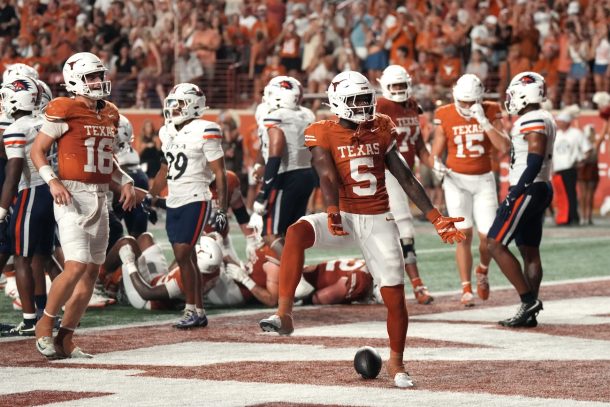
The Skinny: Texas is probably the most intriguing team in the SEC outside of Gainesville. Sean Miller’s squad has parlayed a surprise Sweet 16 run into one of the nation’s top transfer portal classes, led by David Punch, a physical specimen who is hard to move in the post and uses athleticism to play much bigger than his 6-foot-7 (listed) frame.
Punch and Vokietaitis will immediately form one of the nation’s best frontcourts, bettered only by the Gators in the SEC. Right away, the most dangerous aspect of this Texas team is its 1-2 punch (I’ll be here all week) in the frontcourt. Punch, one of the most impactful defenders in the sport last year, gives Texas a bona fide SEC Defensive Player of the Year candidate.
Barring a retroactive 5-for-5 rule, the Horns will miss Jordan Pope and Tramon Mark, two of the team’s best scorers from a successful Year 1 under Miller. Dailyn Swain, the team’s best player, is also gone, off to the NBA Draft and a likely first-round selection.
But there’s plenty to like offensively in the rebuilt backcourt, especially Colorado transfer Isaiah Johnson, who takes care of the basketball and was a highly efficient foul magnet (top 150 in offensive rating and free throw rate) on a bad Colorado team last season. It’s rare to put up his type of elite efficiency numbers on a middling team, especially as a lead guard. He’ll elevate the Horns offensively and give them inside-out punch, especially if Miller, a master at integrating talented freshman, can get top-20 combo guard Austin Goosby comfortable.
The real potential with this team, though, is defense and transition basketball. Punch runs well, Vokietaitis is comfortable as a rim runner, and Mikey Lewis is a perimeter menace who upgrades every perimeter defensive spot from last year’s Texas team. The Horns were an efficient offense that struggled to guard last year. This season, they’ll look more like a rugged Sean Miller team that grinds you to death and finds plenty of offense in transition and at the rim. A Sweet 16 or even higher ceiling is in place as a result.
Does Texas have what it takes to make a Final Four run in 2026-27? Here’s what Kalshi has to say:

Arkansas Razorbacks
Portal Additions: Jeremiah Wilkinson (Georgia), Cooper Bowser (Furman)
Portal Losses: Karter Knox, DJ Wagner, Malique Ewin*, Elmir Dzafic, Karim Rtail, Jaden Karuletwa
Key Recruiting Additions: Jordan Smith Jr, JJ Andrews, Abdou Toure, Miikka Muurinen
Key Players Retained: Billy Richmond**, Meleek Thomas**, Isaiah Sealy
The Skinny: Death, taxes, Arkansas being underrated (at least in my view). John Calipari blending smart portal pieces with the nation’s top ranked recruiting class shows that Cal was built for the NIL era. No, Jordan Smith Jr. isn’t Darius Acuff Jr., and even if Miikka Muurinen is as consistently good as he inconsistently flashes on film, there are still questions on the interior. The offseason isn’t over though, and a waiver for Malique Ewin and/or Micah Handlogten would go a long way to giving Calipari inside-out depth. If Obinna Ekezie Jr. reclassifies, there will be an adjustment to Power 5 college basketball, but Calipari will help him figure it out come March. The Razorbacks did lose Wagner (Maryland) and Knox (Louisville), but both are replaceable role players, as is Ewin, who still may end up back in Fayetteville but wouldn’t be a colossal loss if he landed elsewhere. All told, this is already a deeper, more versatile team than the one that rode Acuff Jr. to the Sweet 16, and if Meleek Thomas and Billy Richmond return to school as most industry sources expect, the Razorbacks have Final Four potential.
Tennessee Volunteers
Portal Additions: Juke Harris (Wake Forest), Miles Rubin (Loyola Chicago), Tyler Lundblade (Belmont), Jalen Haralson (Notre Dame), Terrence Hill Jr. (VCU), Dai Dai Ames (California), Braden Lue (Kennesaw State)
Portal Losses: Amari Evans, Jaylen Carey, Bishop Boswell, J.P. Estrella, Cade Phillips, Clarence Massamba
Key Recruiting Additions: Ralph Scott, Marquis Clark, Manny Green
Key Players Retained: DeWayne Brown II
The Skinny: Along with the loss of Nate Ament to the NBA Draft, there’s an argument that the Volunteers simply lost too much to be considered an offseason “winner.” The loss of J.P. Estrella, one of your author’s favorite players and an immensely skilled big man who transferred to reigning national champion Michigan, will sting without question. But there’s so much to like with this group, especially when you throw in a top 50 recruit in Ralph Scott and a classic Rick Barnes tough guy point guard (Marquis Clark) from the freshman class into the mix in Knoxville.
First things first. DeWayne Brown II, a mountain of a man who will continue to develop but is already a load defensively, returns to anchor the frontcourt. He could become an All-SEC Defensive Team guy if he simply improves in switches.
The headliner, though, is Wake Forest’s Juke Harris. The 6-foot-7 guard was one of the portal’s only bona fide stars, and his decision to attend Tennessee gives Rick Barnes a roster highly capable of reaching another second weekend next March and perhaps, this time, breaking through. Harris averaged 21.4 points last year at Wake Forest, earning All-ACC honors. He had an effective field goal percentage of 52.7%, while shooting 44.4% from the floor and 33.2% from the 3-point line. He’s not terribly efficient, but some of that was likely about location and supporting cast. He won’t be asked to carry the Vols the way he had to carry the Demon Deacons, and if he takes fewer shots and simply focuses on what he excels at: driving, finishing at the rim, and getting to the free-throw line, an All-SEC campaign is in the cards.
Miles Rubin is the Estrella replacement, a big who blocks shots at a prolific rate (20th in block rate, per KenPom), rebounds well, and scores efficiently (58.5% eFG). Is he a winning player? Loyola was perhaps the most disappointing team in college basketball last season, the rare mid-major that had NIL and went 9-24 regardless. Statistically, none of that appears to Rubin’s fault, but Rick Barnes will soon find out. The 2 better picks? Terrence Hill Jr., a bulldog of a lead guard who did it all for the VCU Rams, shooting 37% from deep, posting a top 75 offensive rating nationally, per KenPom, and leading a top 50 defense nationally on the perimeter. Bigger than Ja’Kobi Gillespie, he’ll fit in perfectly in the Barnes system — a classic Barnes city guard who does everything competently.
Jalen Haralson has NBA talent and size on the wing, a great cutter and passer who smashes his way into the paint and gets to the free-throw line constantly. He’s another perfect Barnes fit and, while he isn’t Nate Ament, he won’t need to be as long as he’s shooting 150-plus free throws again and posting a 23% assist rate (top 300 nationally) again. Tyler Lundblade can flat out stroke it, shooting 41% from deep on stupendously high volume (274 attempts) last season. He’s the patented floppy action perimeter staple for Barnes next year and he comes at a home state discount. Throw in Dai Dai Ames, a 38% shooter from beyond the arc for a 22-win California team that nearly reached March Madness, and there’s plenty of shooting on Rocky Top next season.
Aside from Boswell, the Volunteers upgrade (or in the case of the Rubin/Estrella swamp, hold) at almost every defensive spot here, too — welcome news for Barnes, who made the Elite 8 a season ago despite a defense that finished outside the top 10 in defensive efficiency for the first time since 2020.
Texas A&M Aggies
Key Portal Additions: PJ Haggerty (Kansas State), Cade Phillips (Tennessee), Bryson Warren* (G League), Tyshawn Archie (McNeese), Jalen Shelley (Loyola Marymount), Lukas Walls (Radford)
Key Portal Losses: Ruben Dominguez, Josh Holloway
Key Players Retained: Mackenize Mgbako, Jamie Vinson, Jeremiah Green
Key Recruiting Addition: Josh Warren
The Skinny: The Texas A&M Aggies finished 4th in the SEC, winning 22 games, including an NCAA Tournament game, in Year 1 of Bucky Ball. That’s impressive stuff even before you note that McMillan did all of it despite the fact that his best player, Mgbako, missed much of the season due to injury.
Year 2 should see the Aggies compete to advance to the second weekend, especially if Mgbako stays healthy and Haggerty, long one of college basketball’s most intriguing talents, finally puts it all together in College Station playing for a coach who seems an ideal fit for Haggerty’s prodigious talent. The Aggies also retained Jamie Vinson, one of the SEC’s most compelling young frontcourt prospects, giving McMillan frontcourt stability and potentially a defensive anchor for a team that struggled to guard in league play last season. Throw in versatile big Cade Phillips, who has SEC experience, and Loyola Marymount’s Jalen Shelley, a high quality athlete who excels in transition, and the strength of the team is clearly inside, a big time departure from a year ago.
There are a few questions. Namely, can the Aggies replace the night-to-night consistency of Rashaun Agee and the shooting void graduating Rylan Griffen and portal-loss Ruben Dominguez (both shot 40% on high volume from 3) left behind? Tyshawn Archie is a quality shooter (37% at McNeese), as is Lukas Walls (47% at Radford on 89 attempts). But neither have played Power 5 ball and Walls has serious athleticism concerns.
Still, there’s so much to like here between Haggerty’s ability to play with elite gravity and go get a half-court bucket to defensive upgrades across the board that you can see McMillan’s vision: a more efficient group than his first team, which was plenty good.

Neil Blackmon covers SEC football and basketball for SaturdayDownSouth.com. An attorney, he is also a member of the Football and Basketball Writers Associations of America. He also coaches basketball.